


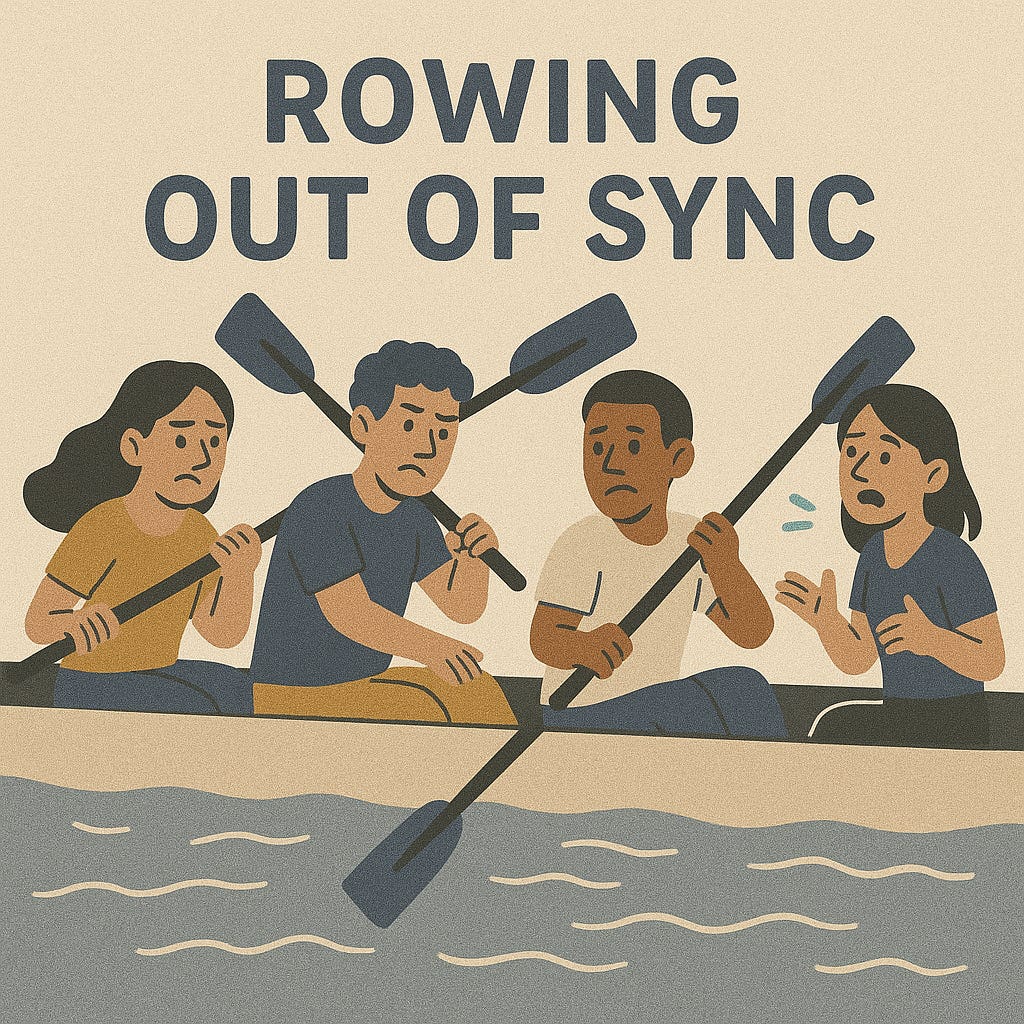
Sales was celebrating the quarter at my medical products client. But churn was quietly racking up in the background. Product was behind on fixes. Marketing was still optimizing a funnel that no longer matched the Ideal Customer Profile (ICP). And Customer Success? They were rowing a leaky boat of support requests without escalation paths.

Nobody had done anything wrong. They just hadn’t done it together.
This is what happens when bottoms-up models run on wishful thinking:
MQLs assumed to convert at historical rates: Marketing Qualified Leads (MQLs) were expected to convert at the same rates as before, without considering changes in the market or customer behavior.
Product roadmap detached from front-line signals: The product team was working on features that didn’t align with the immediate needs and feedback from customers.
Expansion revenue baked in, without coverage: The financial models included optimistic assumptions about post-sale expansion without ensuring the necessary support and resources were in place.
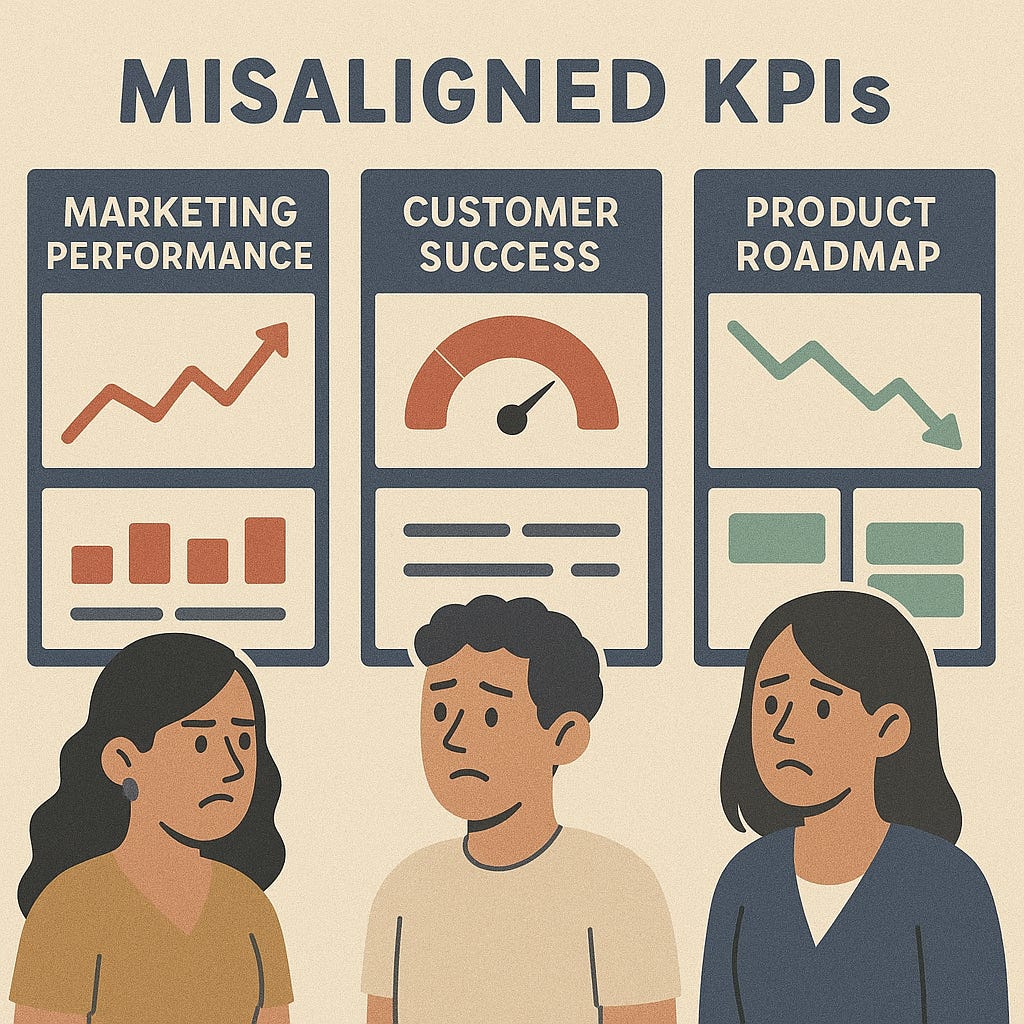
As someone who has worked in Revenue Operations (RevOps), I’ve learned this the hard way: Cross-functional misalignment won’t break your forecast—until it breaks your business.
What Changed?
We realized that alignment didn’t come from top-down pressure. It came from shared truths—and shared consequences. Here’s what we did:
Built a shared GTM cockpit: We created dashboards that showed retention, campaign lift, roadmap velocity, and post-sale health in one view. This helped everyone see the same data and understand the bigger picture.
Held joint planning sessions: We brought the Chief Marketing Officer (CMO), Head of Customer Success, Product Operations, and Finance to the same table for planning cycles. This ensured that everyone’s plans were aligned and that there were no surprises.
Rewrote compensation plans: We tied compensation and Key Performance Indicators (KPIs) across teams. Marketing’s MQL targets, the product roadmap, and Customer Success retention goals were all designed to support the sales revenue plan.
The Result?

Alignment. Not just in theory, but in practice. Every team had skin in the same game, and we all worked towards the same goals. This is what true orchestration looks like.

I wrote "21 Keys to AI Orchestration" for this kind of fix—not to help one function win, but to help the whole company row in sync. Pre-order it on Amazon now, link in comments.
Sales was celebrating the quarter at my medical products client, but there was a leaky boat called churn...
Order the Book on Amazon ==> https://a.co/d/fXCurA7