


The VP of Sales Crisis No One Can Outrun
If you’re a Vice President of Sales in 2026, you’re battling physics, not feelings.
91% of sales orgs missed their targets last year. Forecasts are falling apart. Pipelines are decaying. CRM data is rotting faster than reps can update it. Reps are burning out, culture is fraying, and every board conversation now begins with:
“Why can’t we predict anything?”
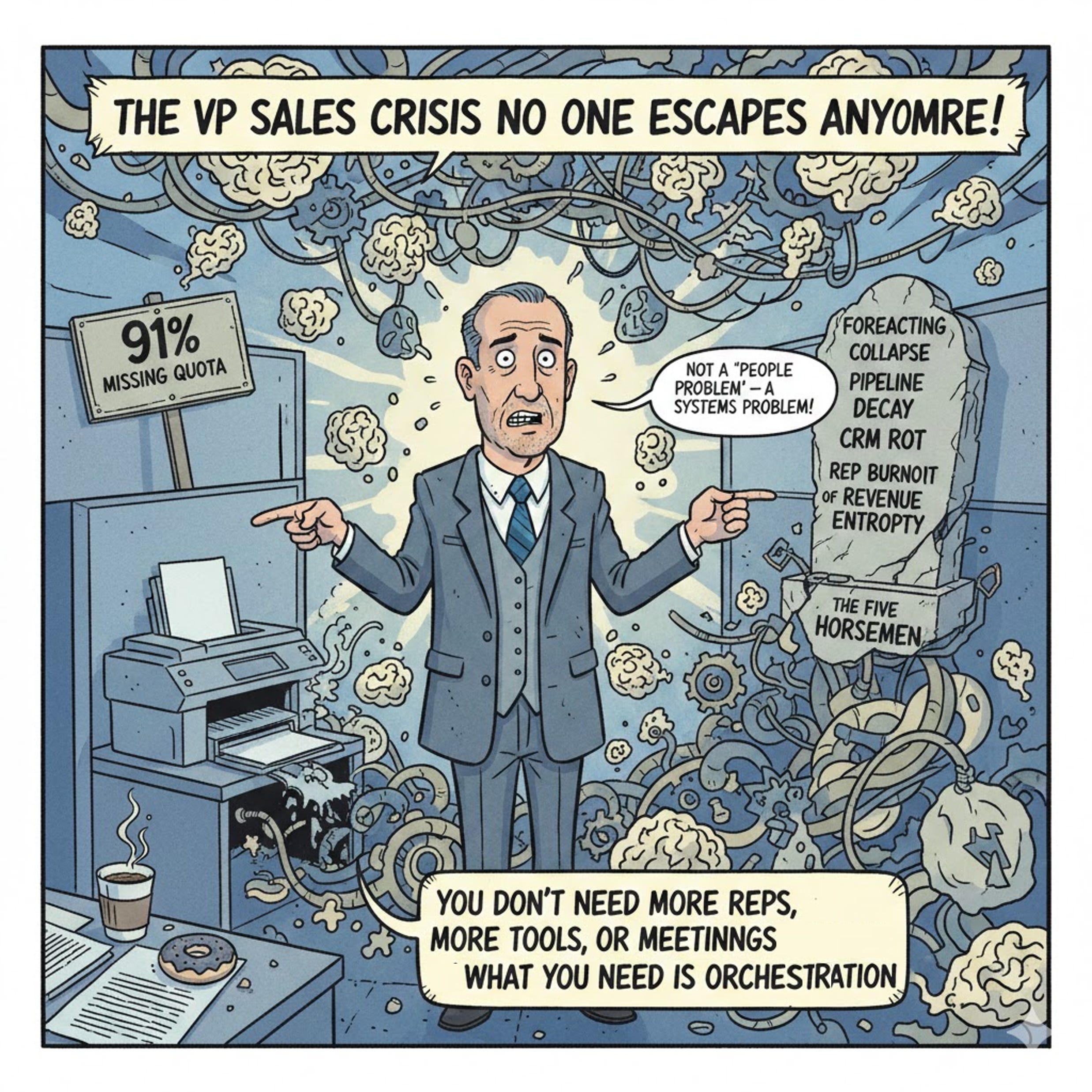
What we’re facing isn’t a rep problem.
It’s not even a talent problem.
It’s a systems problem.
And the only leaders escaping the gravity well are the ones who have embraced a new identity:
The Autodidactic Orchestrator is a VP who learns, adapts, and compounds faster than the dysfunction surrounding them.
This article is your blueprint.
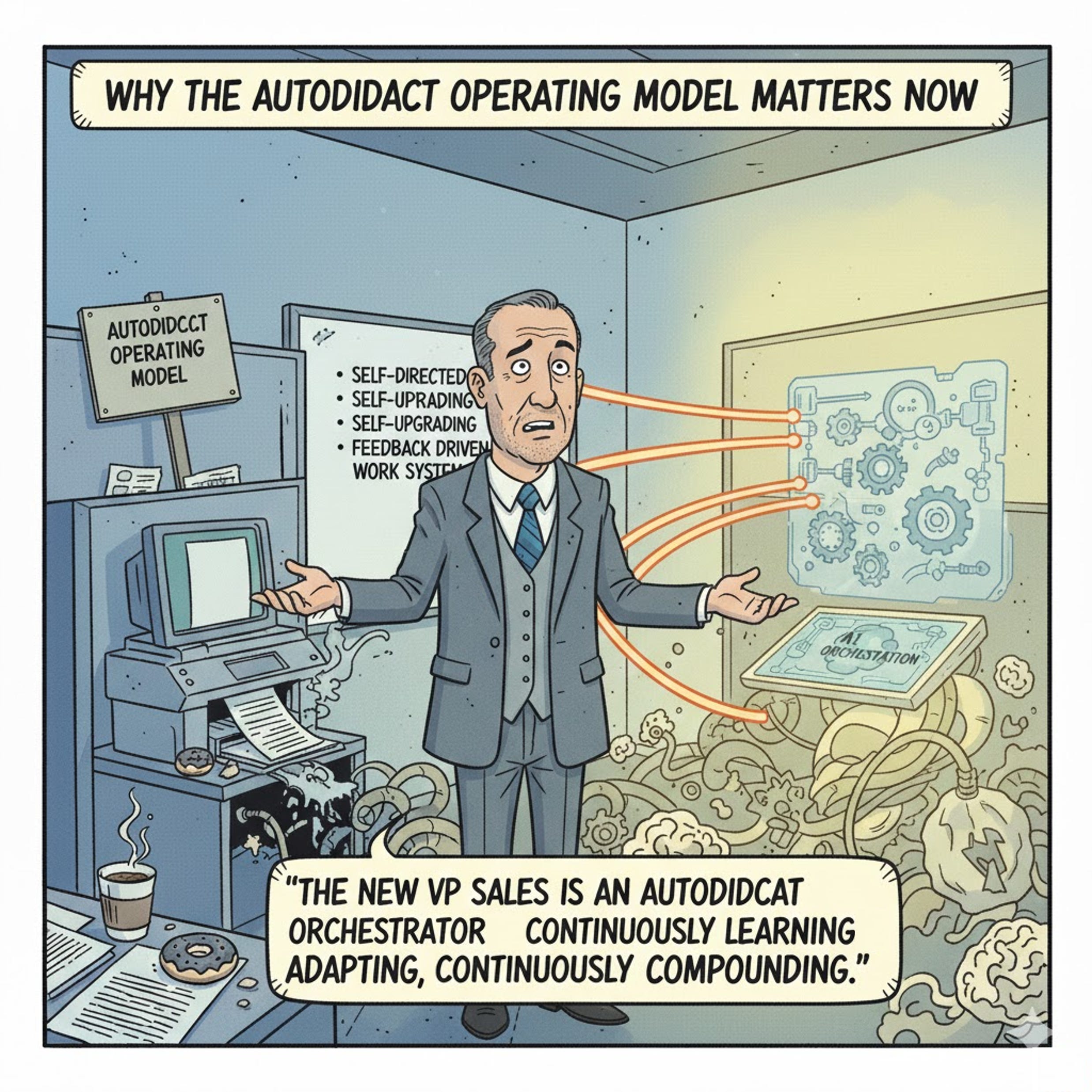
The Autodidact Operating Model: The New VP Superpower
Opinions I read in LinkedIn introduce the concept of the Autodidactic Operating Model arguing that the highest-value workers in modern enterprises are:
self-directed
self-upgrading
self‑synchronizing across functions
able to harness tools without permission or waiting for enablement
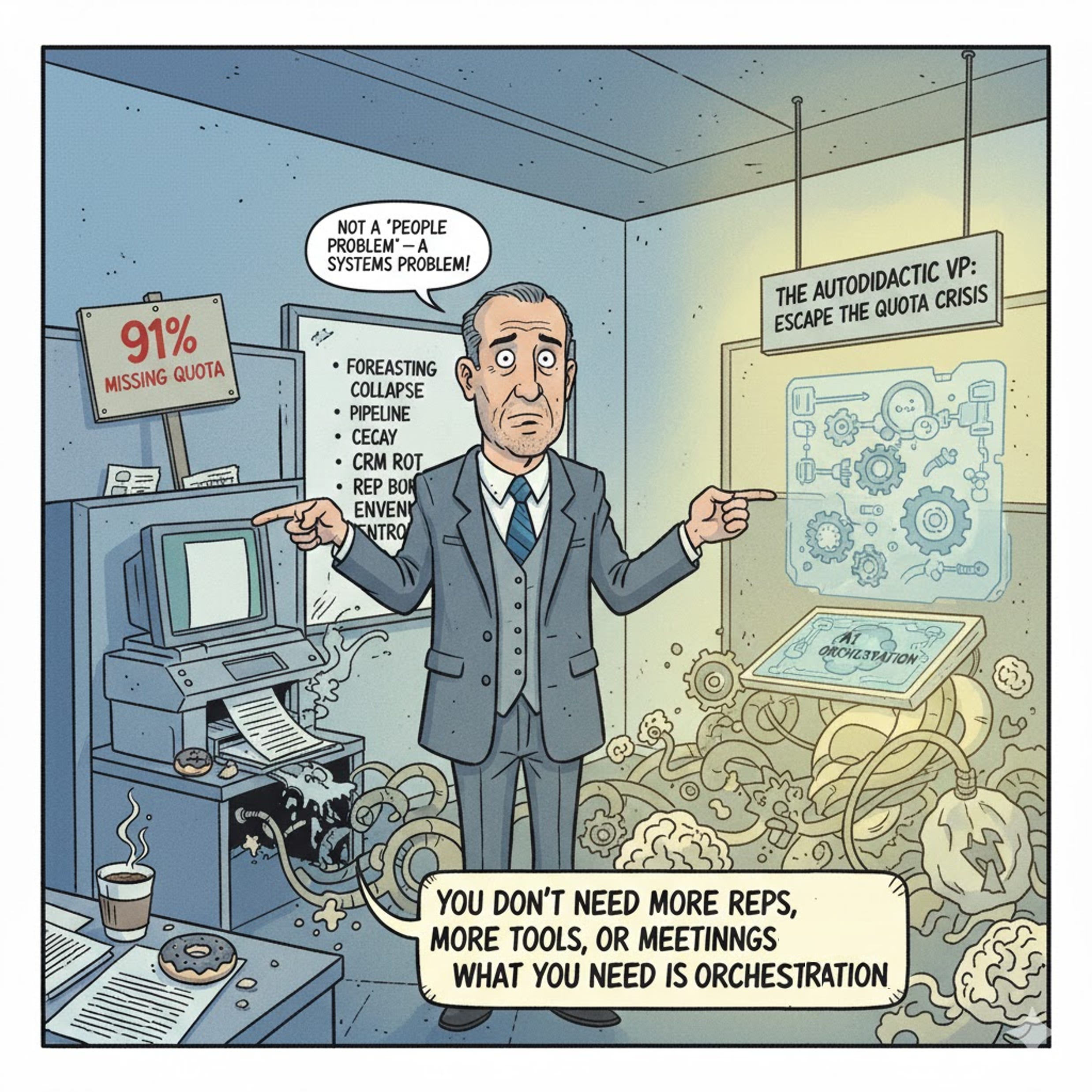
In 21 Keys to AI Orchestration, I argue the same truth from another angle:
The leaders who win are the ones who can orchestrate beyond just manage data, teams, tools, incentives, and signals.
The two models snap together like puzzle pieces.
An Autodidactic VP of Sales is someone who:
learns faster than the market shifts
composes systems instead of chasing tools
sees signals others miss
blends human + machine capabilities for asymmetric performance
never waits for permission to fix what’s broken
This is how you escape the quota crisis.
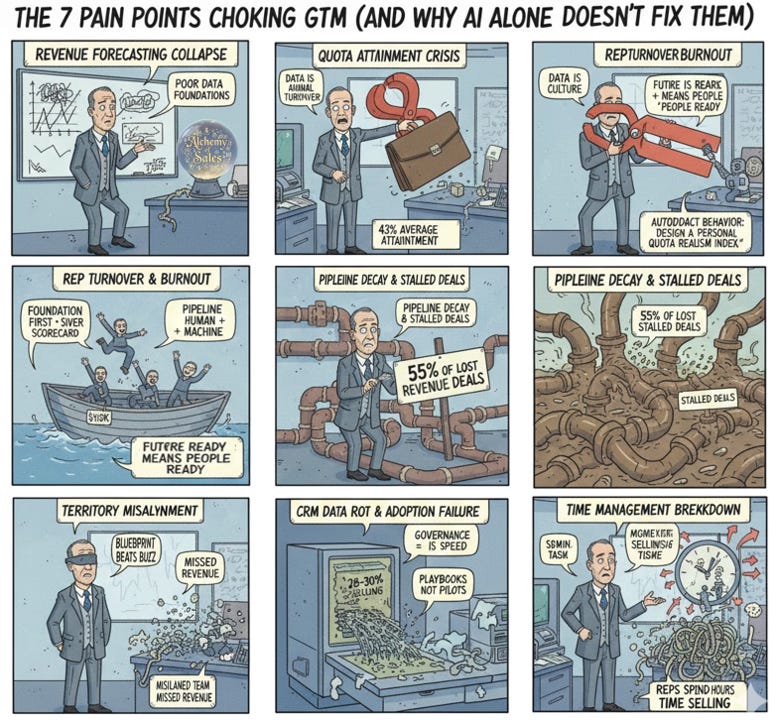
The 7 Pain Points Choking GTM (and Why AI Alone Won’t Save You)
The VP Sales file makes it painfully clear: the problems killing revenue today are structural. Each one maps directly to the orchestration principles in the book.
3.1 Forecasting Collapse
Forecasts are consistently unreliable because they’re built on:
weak predictive infrastructure
rep‑assigned probabilities severed from reality
ignored early danger signals
Chapters from the book, tie‑into these pains:
“Foundation First,” “Signals Over Spray,” and “Data is Culture” are three chapters of my book that relate to the point of forecasting.
Autodidactic move:
Build a personal predictive signal stack instead of relying on CRM fields.
3.2 Quota Attainment Freefall
Average attainment is now 43% .
This isn’t a motivation problem. It’s math.
“Human + Machine” is a chapter from my book that ties into this pain because quota failure is a misallocation of human effort.
Autodidactic move:
Construct your own Quota Realism Index using historical, TAM (or TRM - total relevant market), and deal velocity.
3.3 Rep Turnover at 35%
The hidden cost is not the $115K (or whatever it is) per rep replacement number .
It’s the lost 60–90 days of pipeline momentum that disappear during transitions.
“Future Ready Means People‑Ready” is a chapter from my book that connects into this pain.
Autodidactic move:
Redesign coaching from performance evaluation → performance enablement.
3.4 Pipeline Decay & Stalled Deals
55% of revenue loss is because deals get stuck .
Not lost. Not competitive. Just… idle.
“Blueprint Beats Buzz,” and “Stakeholder Power” are a couple chapters from my book that link into these points.
Autodidactic move:
Build deal‑health models based on engagement signals, not deal stage.
3.5 CRM Data Rot
76% of CRM data is inaccurate or incomplete .
You cannot run AI on garbage.
“Governance = Speed,” “Data is Culture,” “Playbooks, Not Pilots” are three chapters of my book that relate to the point of data rot.
Autodidactic move:
Create personal and team‑level Data SLAs.
3.6 Territory Misalignment
Uniform quotas on non-uniform territories = silent sabotage.
“GTM Alignment” is a chapter from my book relating.
Autodidactic move:
Run micro‑TAM analysis monthly instead of yearly.
3.7 Time Management Collapse
Your reps spend 70% of their time not selling .
This is the silent killer of every sales organization.
“Momentum Flywheels,” and “Human + Machine” are a couple chapters from my book that mesh with the time self management element.
Autodidactic move:
Implement agentic automations that reclaim 5–15 selling hours weekly.
Why the Solution Isn’t AI Tools. It’s AI Orchestration
Every VP has tools.
Almost none have orchestration.
Orchestration is the ability to unify:
data
human judgment
signals
systems
governance
enablement
process
into something that compounds.
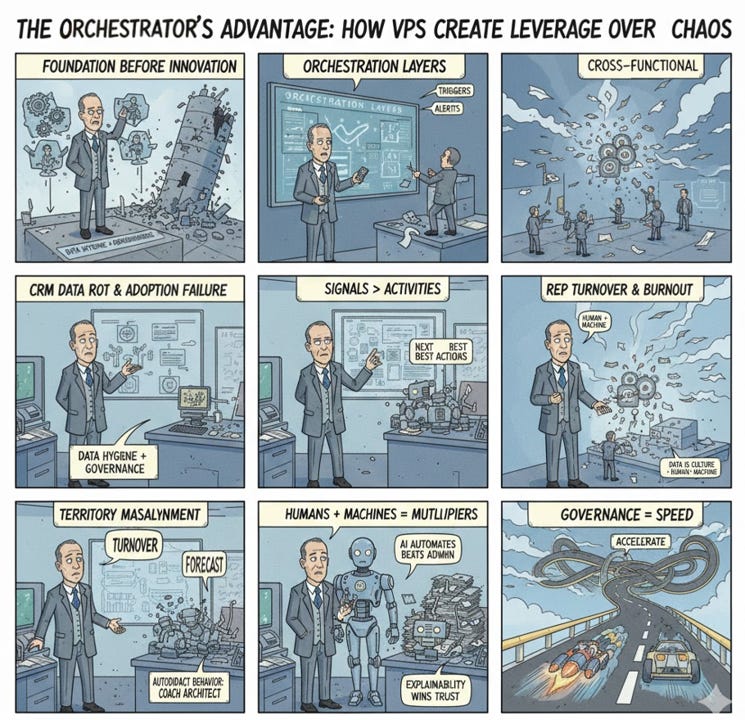
Inside 21 Keys to AI Orchestration, these show up as:
4.1 Foundation Before Innovation
Broken data → broken GTM.
Chapter 2’s mantra: clean pipelines beat clever models.
4.2 Signals Over Spray
Intent signals > activity volume metrics.
Chapter 7 shows how a 40% increase in conversions came from reading the right signals.
4.3 Humans + Machines = Multipliers
Machines should remove admin burden; humans elevate strategy.
This synergy is real and measurable.
4.4 Governance = Speed
Guardrails (SDLC, compliance packs, audit trails) accelerate adoption.
The Autodidactic Application of the 21 Keys to AI Orchestration Book
Here’s how modern VPs apply the Autodidactic Operating Model directly to the orchestration keys.
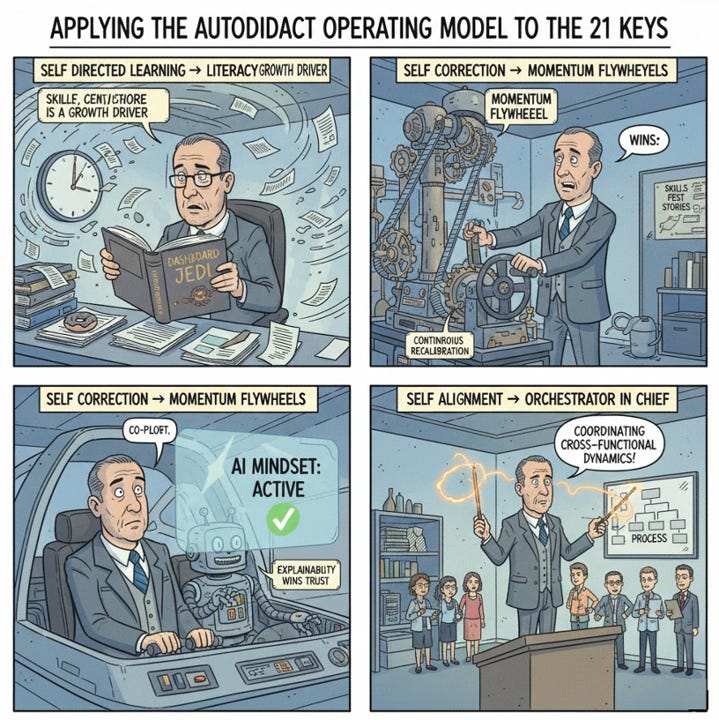
5.1 Self‑Directed Learning → Literacy is a Growth Driver
Your teams upgrade only after you upgrade.
In the book, the “Dashboard Jedi” and “AI Skills Fest” examples show how literacy accelerates revenue velocity .
5.2 Self‑Correction → Momentum Flywheels
Small wins → bigger wins → cultural flywheels (Chapter 18).
5.3 Self‑Trust → AI Mindset
Reps trust AI when leaders model transparency (Chapter 1).
5.4 Self‑Alignment → Orchestrator‑in‑Chief
Cross-functional alignment = revenue velocity (Chapter 9, 10).
The Autodidactic VP’s Revenue Engine (Blueprint)
This is the template I see separating winners from laggards across SaaS, logistics, security, and services:
Layer 1 Mindset
AI as co‑pilot
Transparency over black boxes
Curiosity over defensiveness
Layer 2 Data
unified truth
signal graph
pipeline hygiene
data stewards + SLAs
Layer 3 Execution
next‑best‑action workflows
deal‑health alerts
automated QA
GTM process governance
Layer 4 Human Layer
literacy programs
localized champions
co‑creation sessions
criticism → collaboration loops
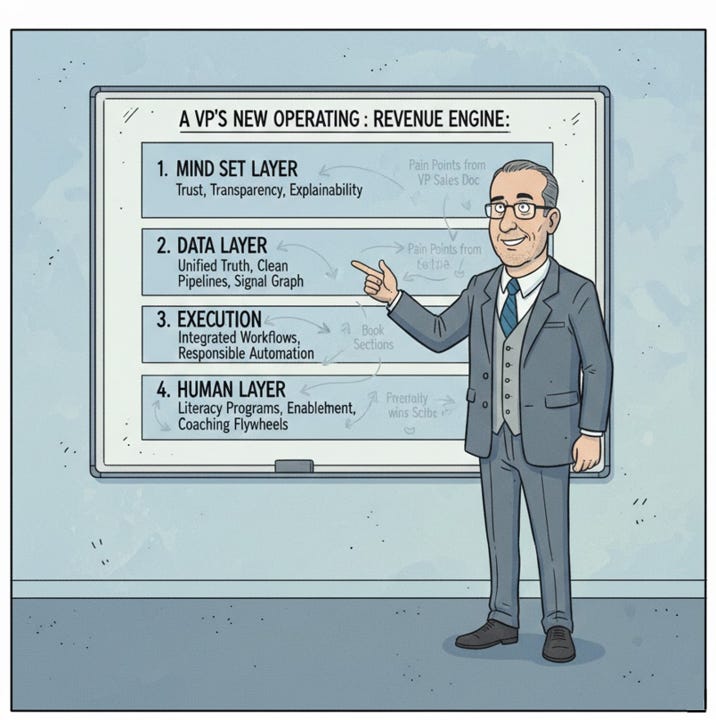
This is how you get reps from 30% selling time → 45–50%.
This is how you go from gut‑driven forecasts → statistical predictions.
This is how you reduce rep churn and increase quota attainment.
What an Orchestrated VP Can Fix in 90 Days
These numbers come directly from the pain‑point analysis :
+10–15% forecast accuracy
+20–35% pipeline velocity
+5–15 reclaimed selling hours weekly
$2M–$5M unlocked from territory redesign
20–30% CRM quality improvement
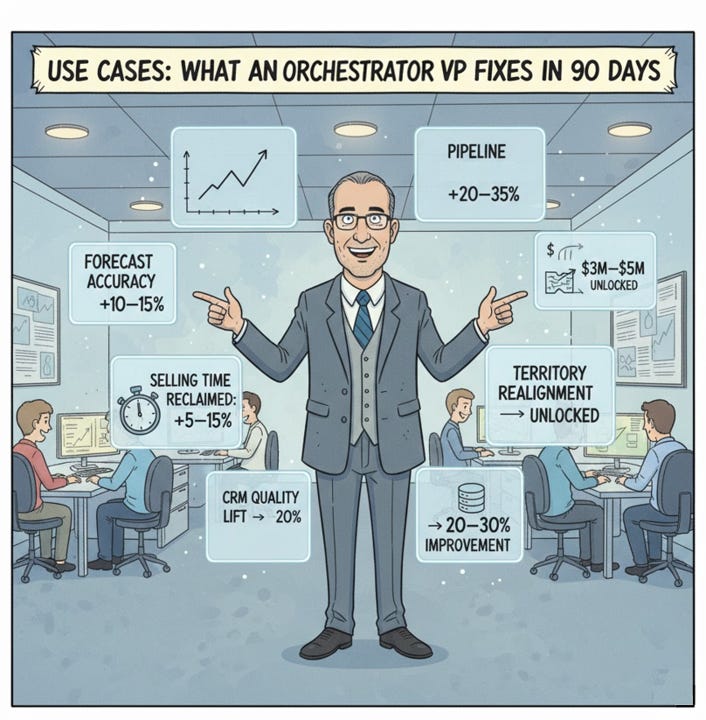
This is what a VP becomes when they operate like an Autodidactic Orchestrator.
Not a firefighter.
Not a tool administrator.
Not a spreadsheet hostage.
A systems composer.
Why Solopreneurs and Fractional Operators Give VPs Unfair Advantage
VPs don’t have time, bandwidth, or internal skill sets to fix foundational GTM mechanics .
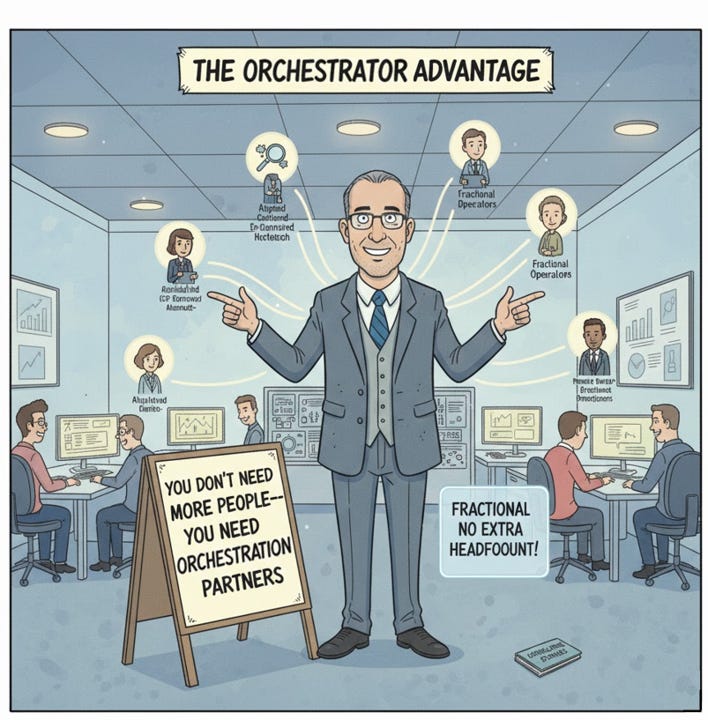
Fractional operators are the new leverage objects.
They deliver:
diagnostic depth
GTM orchestration capability
data cleanup
playbook creation
forecasting redesign
signal‑based selling systems
Without adding headcount.
Without adding politics.
Without waiting for annual planning.
This is the easiest arbitrage opportunity in modern GTM.
Closing: Future Ready = People Ready
The final chapter of 21 Keys states it simply :
Technology changes fast. People change slowly. Orchestration is how you bridge that gap.
Your job as a VP is no longer running deals, managing opinions, or filling dashboards.
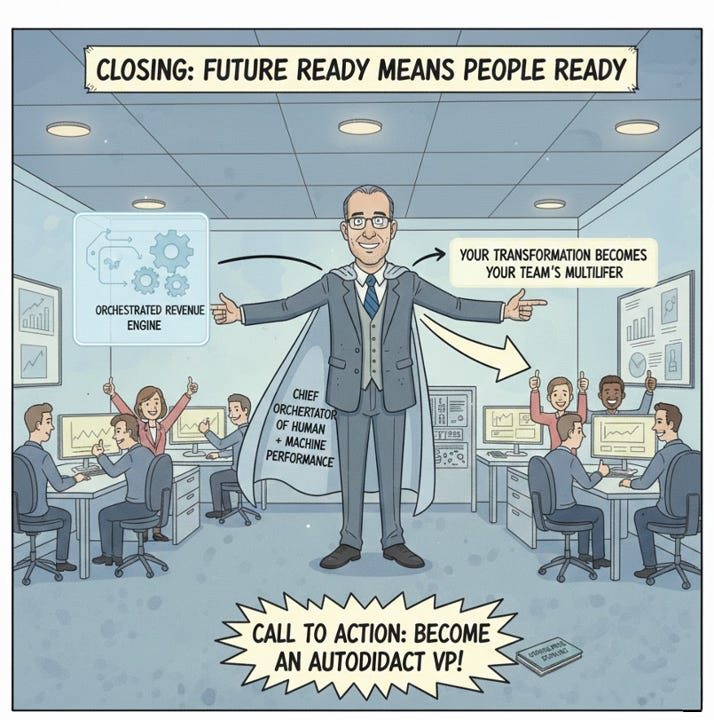
Your real job is to create conditions where:
humans get more powerful,
machines handle the drudgery, and
systems become self‑reinforcing.
Because once you orchestrate your people, your data, your process, your signals, and your tools into one flywheel…
You stop playing catch‑up.
You start compounding.
The Autodidact VP is the one who wins this era.
And your transformation starts the moment you decide to lead like an orchestrator instead of a manager.
You’ve got the keys.
Now go unlock what’s next.
Fascinating! I agree about traditional sales models dying. Much to consider- Thank you!