


I was the least technical person at my table.
I shipped anyway.
That’s the whole story. But the reason it worked is the part every CRO and Founder needs to hear.
The Room
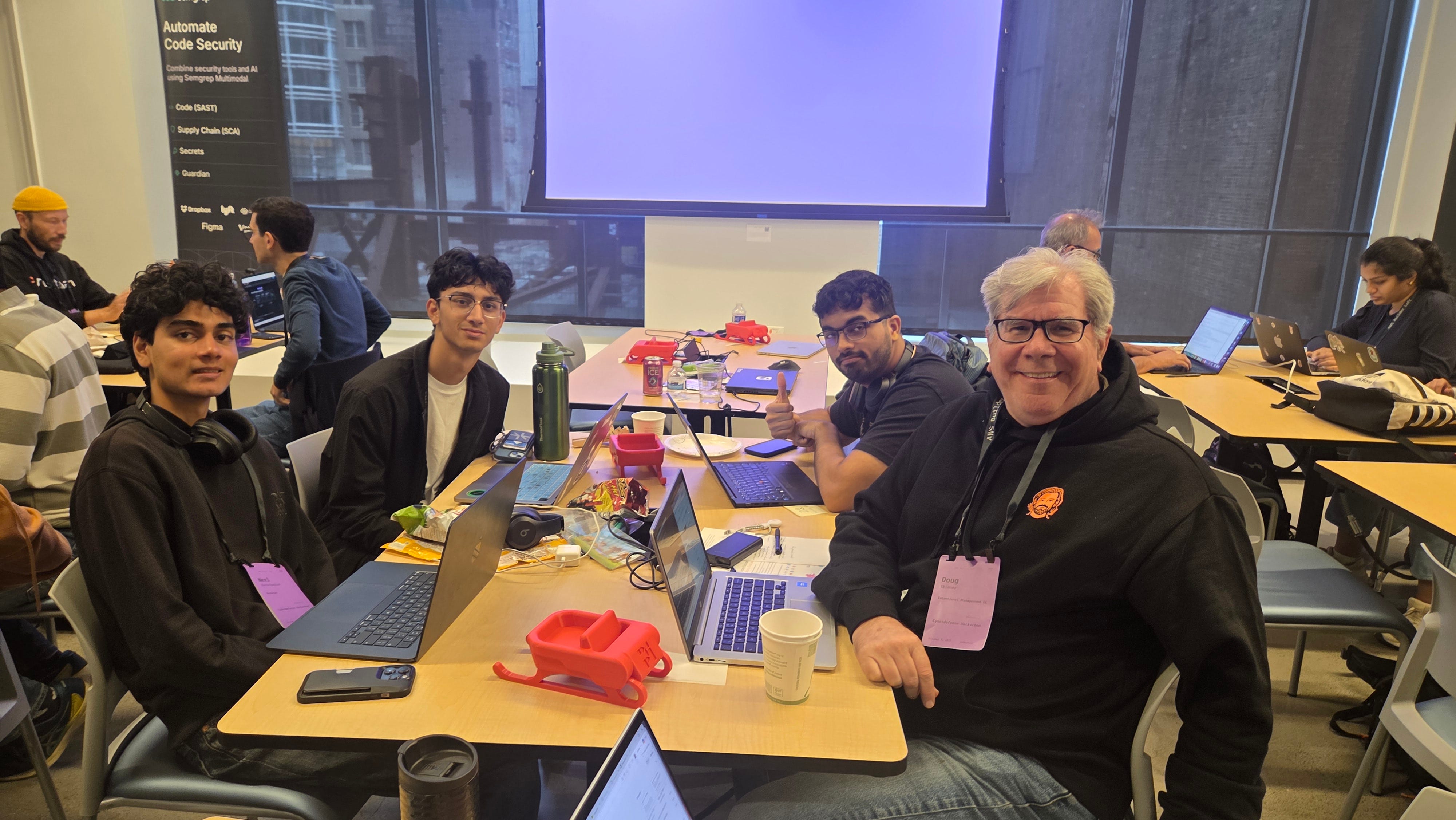
Last Friday I walked into the a16Z AWS SF Tech Week Cyber Defense hackathon.
Over 200 builders. Hoodies. Terminals. Red Bull. Pizza. The chatter of engineers out of their dens. The hum of people who think in code.
I brought a Chromebook, not my regular machine.
You know the NFL draft’s “Mr. Irrelevant”? The last pick of the last round.
That’s how I felt pulling up a chair.
I picked my table on purpose. Three people sat down with me. Vishal from a San Jose. Two UC Berkeley computer science sophomores, Rishit and Neel.
They had the look. You know the look.
My head was loud.
Is my technical aptitude up for this? What’s my stack? Can I actually use the sponsors’ tools? Will this Chromebook choke on the workload?
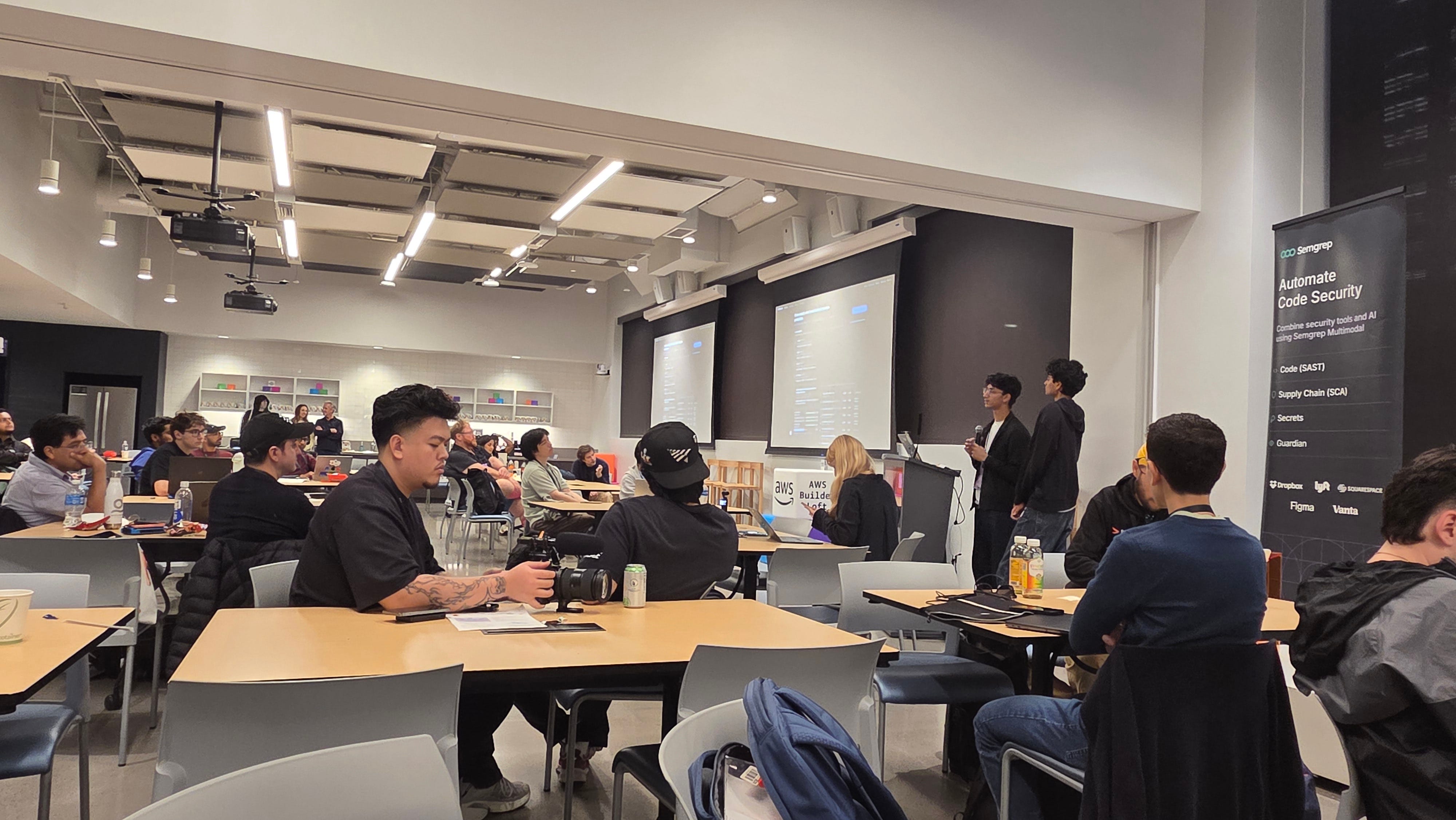
Every operator has felt this. In a boardroom full of engineers. In a demo with a technical buyer. In a planning meeting where RevOps speaks a language Sales doesn’t.
The Problem Isn’t the Code
Here’s what most GTM leaders get wrong about AI.
They think the gap is technical skill. It isn’t. Not anymore.
AI tools now write the code. They scaffold the repo. They fix the errors you don’t understand.
The gap that remains is judgment.
What problem are you solving? For whom? In what order? How do the pieces connect?
That’s not an engineering question.
That’s an operator question.
And it’s the one most rooms full of builders skip.
My Two Non-Negotiables
I walked in with only two rules.
One. Whatever I built had to follow my four-tier architecture. Signal. Research. Outreach. RevOps. Every system I compose follows that spine.
Two. It had to solve a customer problem I could relate to. Something I’d be excited to explain on a sales call.
Everything else was negotiable.
Think of it like a general contractor.
The contractor doesn’t pour concrete or wire the panel. But nothing gets built without the blueprint. And nobody pours a foundation in the wrong spot on their watch.
The Stack I Assembled
Here’s what an operator’s build stack looked like, on a Chromebook, in one day.
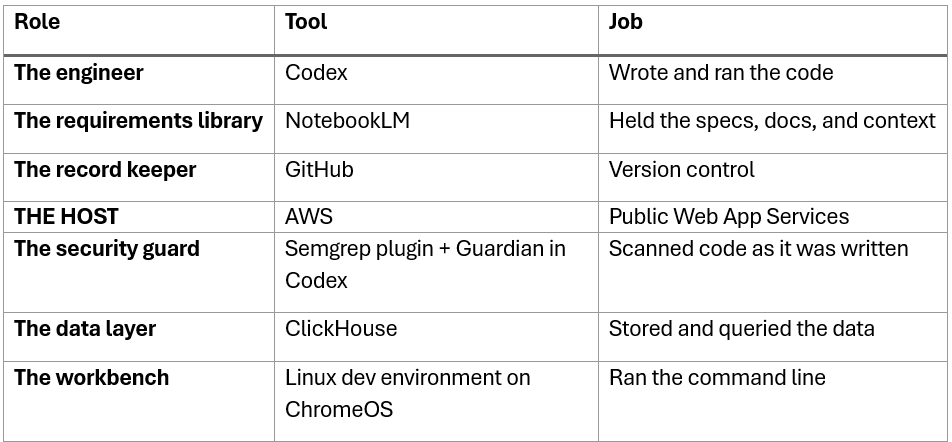
I set up a GitHub org, GTMSoS Personal. I signed into Semgrep through it. I wired Git into Codex.
None of that is glamorous. All of it is orchestration.
The project took shape as an agentic development lifecycle that ends in a self-healing cyber defense pipeline.
Code gets written by an agent. Code gets scanned by an agent. Problems get flagged and fixed before they ship.
That’s not a security idea. That’s an operating system idea.
The Moment That Mattered
Midway through, I was staring at my own architecture diagram.
It said DynamoDB.
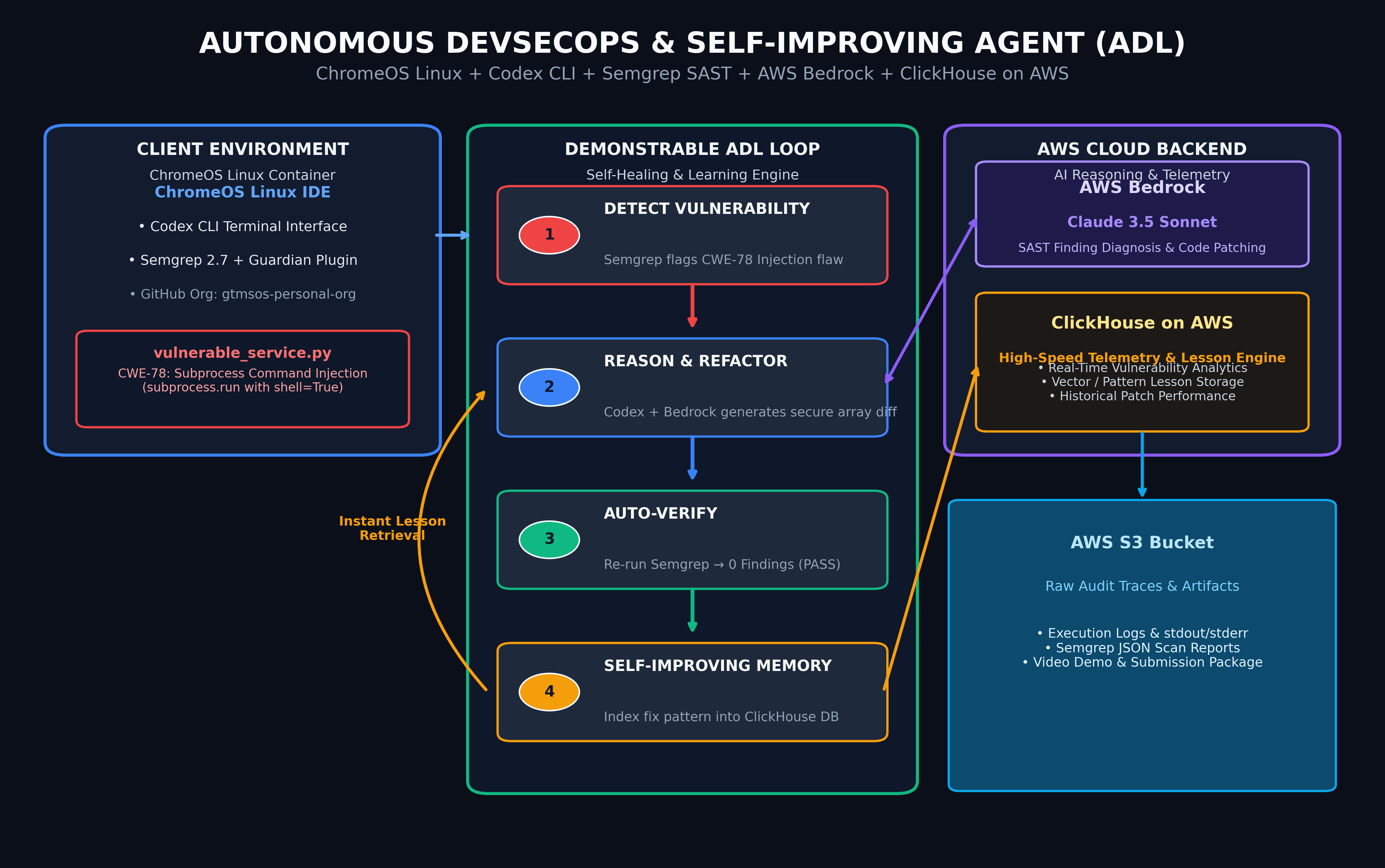
ClickHouse was a sponsor. I hadn’t planned for it.
Then it clicked. I can just swap the database.
The diagram didn’t break. The layer stayed the same. Only the component changed.
That’s the lesson in one sentence.
When you own the architecture, the tools become interchangeable.
Most GTM teams run the opposite way. They buy a tool first. Then they bend their process around it. Then they’re stuck when a better tool shows up.
A CRO who owns the layers can swap a data provider in a week. A CRO who owns a pile of tools rebuilds for a quarter.
I imported 1GB of cell tower dataset into ClickHouse. I didn’t get to use it before the deadline.
That’s on my list. I’ll go back and test the pipeline against it.

The Result
I submitted. I crossed off nearly every requirement before the clock ran out. Working demo. Video. Github repo.
I didn’t win.
But Mr. Irrelevant made the roster.
And I left with something more useful than a prize. Proof.
An operator with a clear architecture and a real customer problem can build alongside full-stack developers. Using the same AI tools. On a Chromebook.
What This Means for You
If you’re a founder, a CRO, or a VP of Sales, here’s the takeaway.
Stop asking “Can my team code this?”
Start asking “Do we own the blueprint?”
Three things to steal:
1. Lead with architecture. Define your layers before you buy a single tool. Signal. Research. Outreach. RevOps.
2. Assign roles to tools. Every tool gets one job. Engineer. Library. Record keeper. Guard. If two tools share a job, one is waste.
3. Stay swappable. If a sponsor, vendor, or partner offers a better component, your blueprint should let you drop it in by lunch.
That’s how you scale revenue without headcount.
Not by hiring more engineers. By composing the system they work inside.
Hats Off
The builders in that room were exceptional. Respect to every winning team.
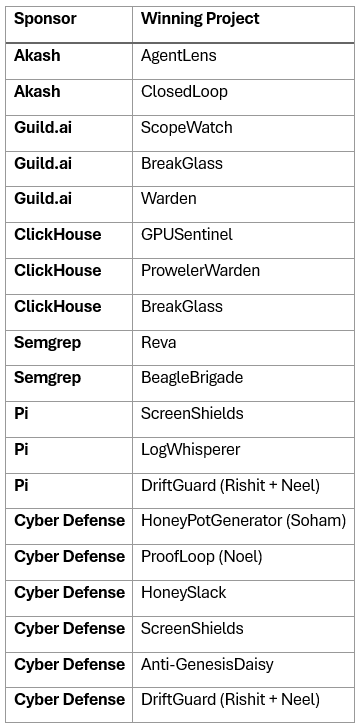
Special shout to DriftGuard and ScreenShields. Two wins each. That’s not luck.
One Question for You
Where in your GTM motion are you the “Mr. Irrelevant” at the table?
And what would change if you walked in owning the blueprint?
Hit reply. I read every one.
Proud of you @Doug Skinner! Keep learning and shipping away! 🚀🚀🚀