


Most people think authority is a content problem.
Post more. Show up more. Be more “visible.”
Wrong.
Authority is a system problem. And until you solve the system, you’re just adding noise to an already noisy world.
Here’s the truth about buyers and investors that they already know: they don’t reward loud. They reward certainty. Certainty doesn’t come from charisma. It comes from evidence, delivered consistently, inside a repeatable machine.

That machine is what I call System Authority.
This is Week 1 of the Search-First GTM Authority series, and it’s the part most founders and revenue leaders skip, because it feels like homework. But it’s the key part that works.
Authority Isn’t Vibes. It’s Reduced Uncertainty.
I was listening to one of the founders recently where someone described their goal as building “the most trustworthy brand in an untrustworthy space”, and that a culture of trust and transparency “facilitates velocity.”
That’s not marketing copy. That’s an operational insight.
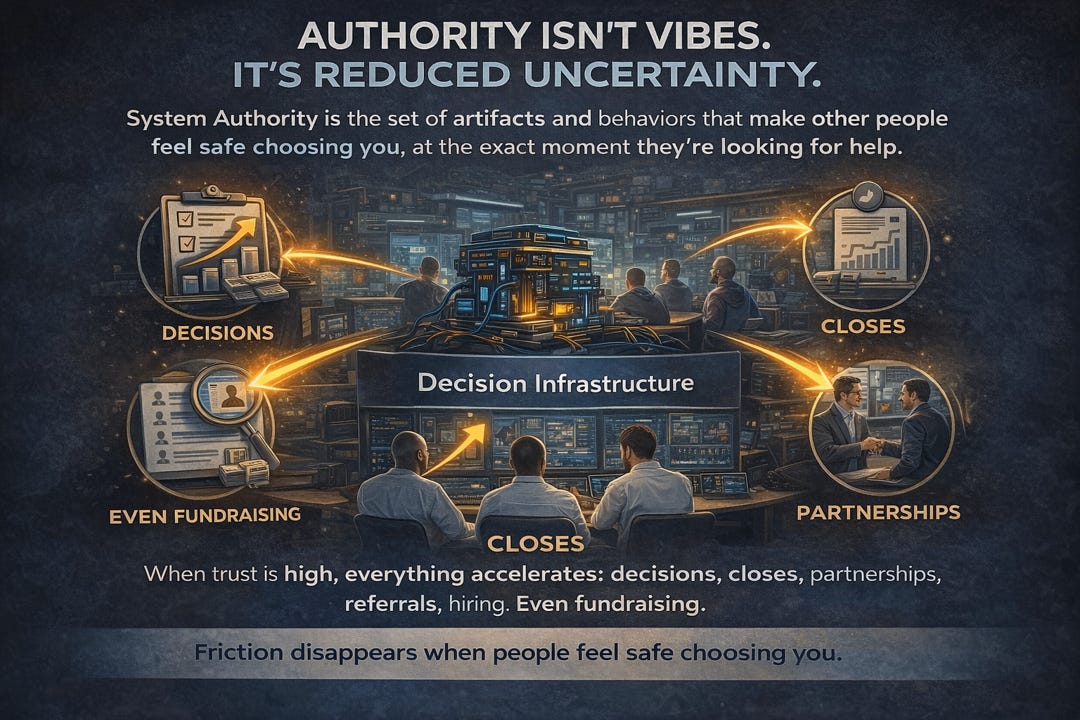
When trust is high, everything accelerates: decisions, closes, partnerships, referrals, hiring. Even fundraising. Friction disappears when people feel safe choosing you.
So here’s my working definition:
System Authority is the set of artifacts and behaviors that make other people feel safe choosing you, at the exact moment they’re looking for help.
Search-first just means those artifacts are findable when someone is already searching for the answer you have.
What System Authority Is (and Isn’t)
Let me be direct about what this is NOT:
Posting every day with no strategic spine
“Thought leadership” that never becomes a process
A personal brand with no receipts to back it up

System Authority IS:
A documented GTM Operating System, how you actually win
Proof that it works, why anyone should believe you
A publishing engine that turns your system into searchable answers
This is why content alone fails. You can’t scale trust on fluff. The goal isn’t massive inbound on Day 1, it’s building a place people can find, where they learn to know, like, and trust you. That place becomes your trust-building machine.
The 4 Assets That Create System Authority
1. Your POV: Category and “Why Now”
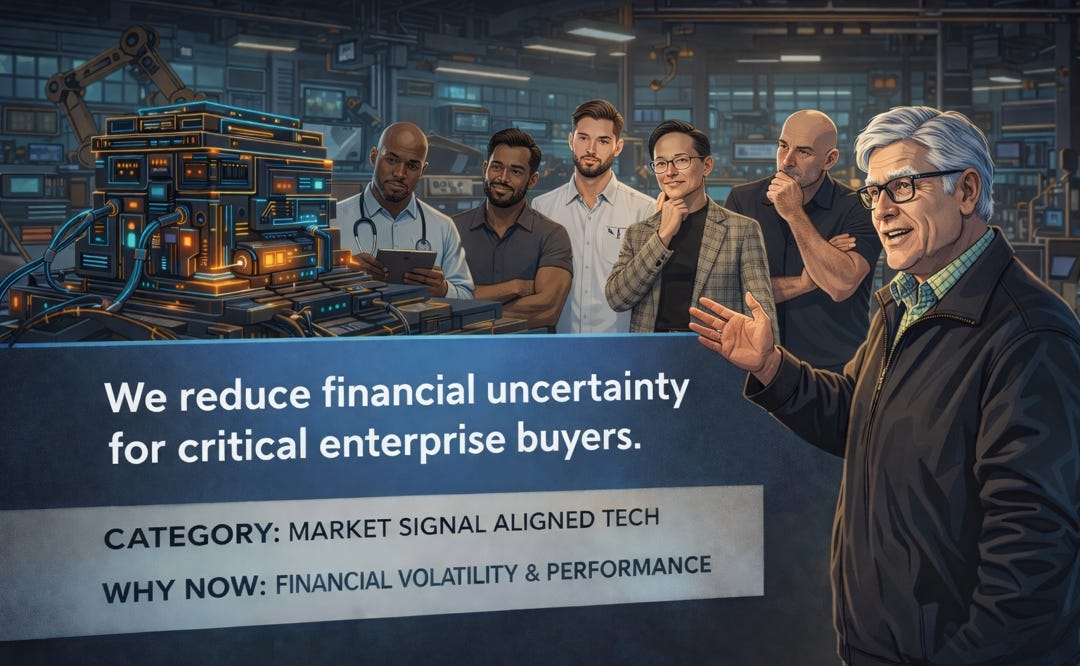
One clean sentence. What you do, who you do it for, why it matters right now. No nine-word soup. No “AI-powered synergy.” One sharp claim that a buyer can repeat to their boss without you in the room.
2. Your Process: The Operating System
This is the missing piece for most GTM consultants and revenue leaders. They have opinions. They don’t have a system.

System Authority requires you to name and document: how you diagnose, how you prioritize, how you execute, how you measure. If your buyer can’t explain your methodology without you present, you don’t have a system yet. You have a conversation.
3. Your Proof: The Receipts
A founder I heard described the “perfect environment” for building authority as being at a conference where a credible operator publicly validated results in real time. That’s the point: third-party proof collapses doubt faster than anything you say about yourself.

Proof is numbers, case studies, before/after scenarios, repeatable patterns across clients, public references. If you have it, show it. If you don’t have it yet, your Week 1 job is to go get it.
4. Your Publishing Engine: Search-First Distribution
Search-first means you publish answers to questions your ICP is already asking, not top-of-funnel awareness plays, but high-intent searches:
“GTM strategy for B2B SaaS”
“sales operating system template”
“how to find PMF without hiring a full team”
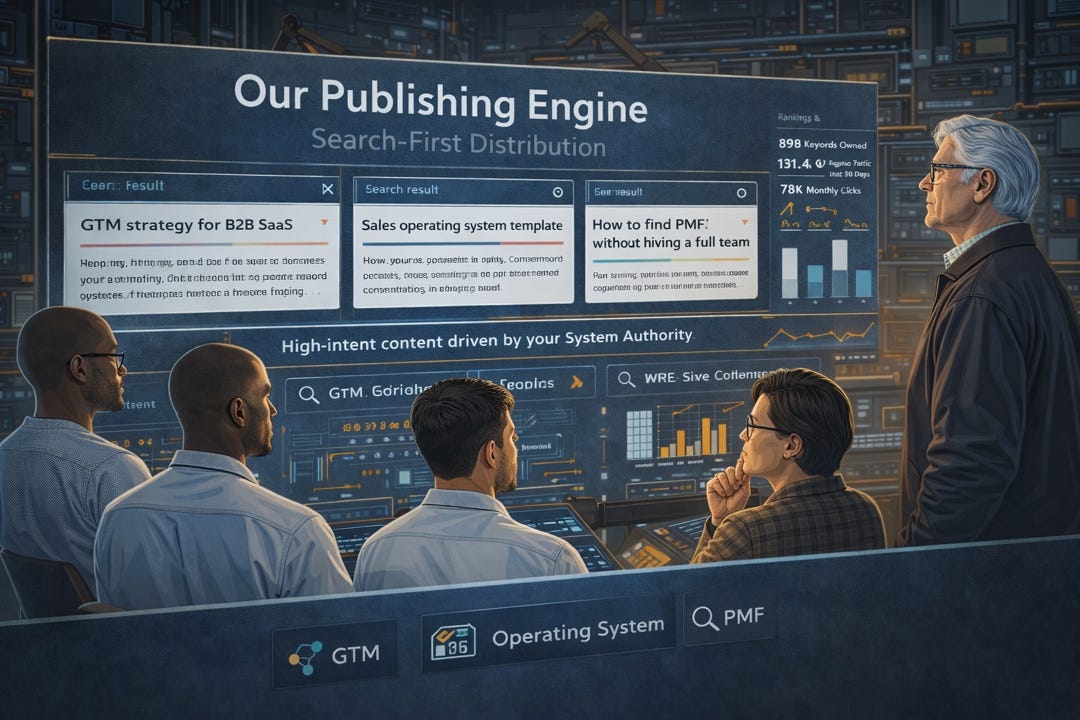
Your system drives the content topics. Not the other way around.
Investor Reality Check: What They’re Actually Optimizing For
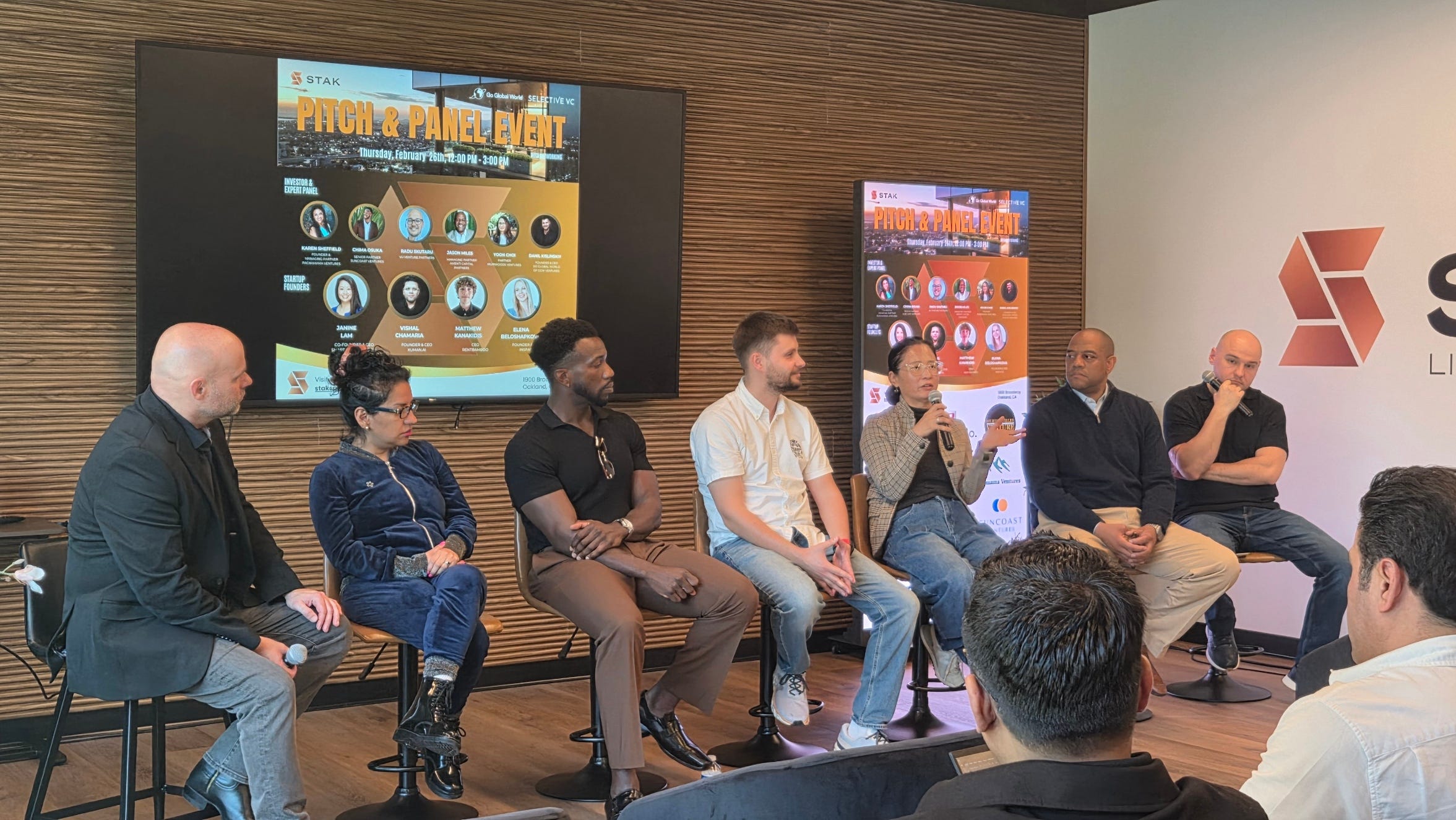
I dug into the backgrounds of the investor panelists for this cohort. Here’s the translation:
Karen Sheffield (Pachamama Ventures): Climate tech with corporate demand and partnership potential as the scaling path. Not consumer vibes, provable B2B impact.
Chima Osuka (Suncoast Ventures): Early-stage healthcare, specifically “critical gaps” with real-world impact. Not sci-fi. Not someday. Now.
Yoon Choi (Muirwoods Ventures): Cross-border, mobility/automotive DNA. Long cycles, deep enterprise relationships.
Jason Miles (Amenti Capital Partners): Connected mobility and digital ecosystems. Founders who understand enterprise sales reality, not founders who think enterprise means “a bigger SMB.”
Radu Skutaru (VU Venture Partners): Global, multi-stage, multi-sector across Consumer, Enterprise, FinTech, Healthcare, and PropTech. Deal flow at scale with selectivity.
Danil Kislinskiy (GGW Ventures): Software-focused syndicate. Later-stage lean, late seed/Series A+ with an ARR bar. Not idea stage.
The common thread: investors aren’t buying cool products. They’re buying systems that turn risk into probability.
The Bottom Line
Week 1 of Search-First GTM Authority is not “post more.”
Week 1 is build a system worth finding.
That’s what we’re doing at GTM SoS.
→ Subscribe to get the rest of the series, including the templates that turn this into a machine.
→ And if you want the system in a book, read my 21 Keys to AI Orchestration, built to help you turn strategy into repeatable execution, and to make sure when someone searches for the GTM answer you already have, they find you.
Doug Skinner is a GTM strategy and AI orchestration consultant with 40 years in enterprise technology. He works with VP Sales, Revenue Leaders, Founders, and CROs who are ready to stop adding AI tools and start building AI-driven GTM systems.