


The 2026 Constraint
Most CROs I talk to are facing the same pressure right now.
Grow revenue. With last year’s team.
Hiring is frozen. CAC is climbing. Sales cycles are longer. And the board still wants the number.
The constraint isn’t talent. It isn’t market. It’s capacity.
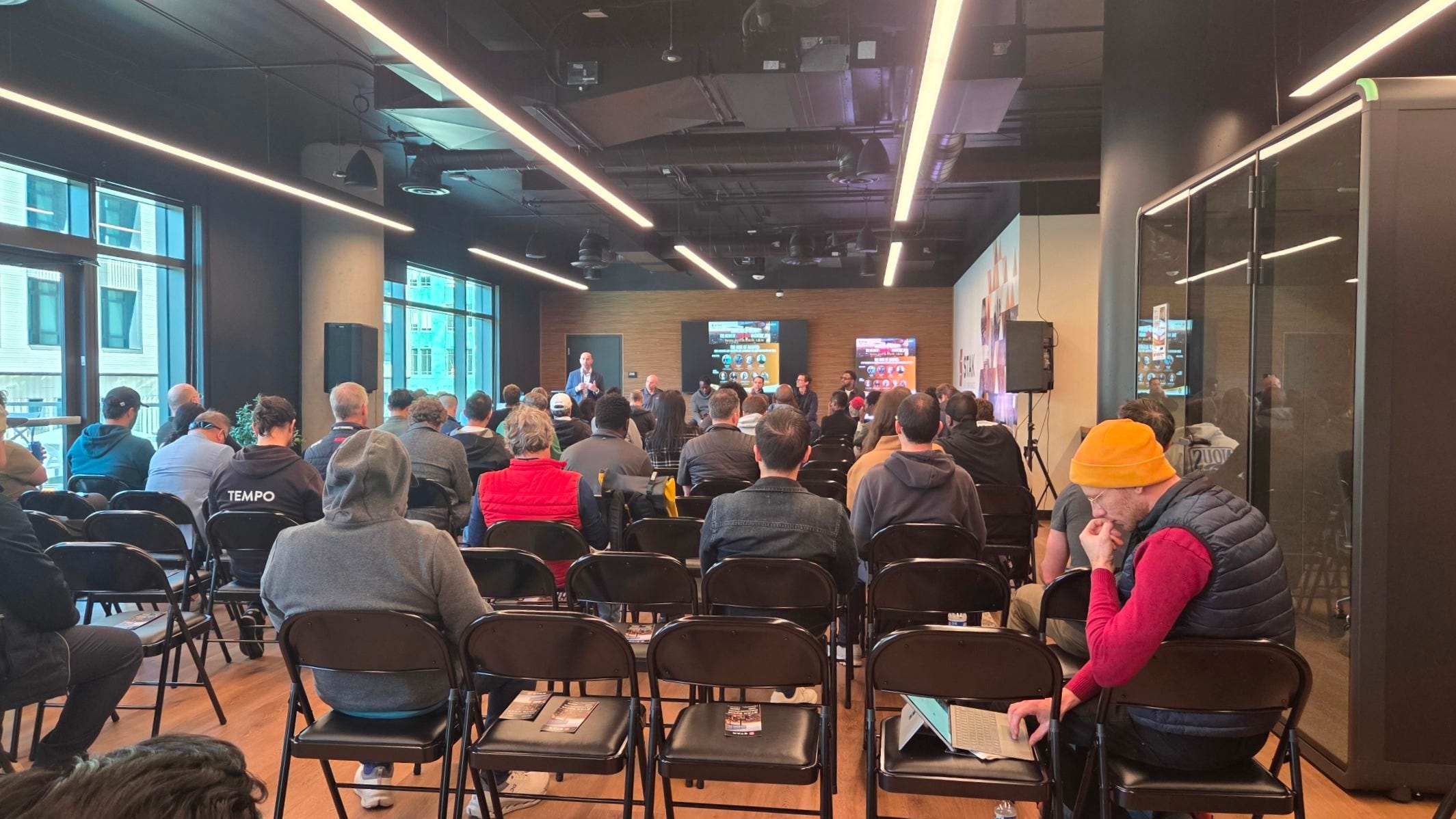
Here’s what I’ve come to believe: AI sales agents aren’t replacing sellers. They’re replacing the friction around selling. The admin. The research. The CRM updates. The endless prep work that burns 30 to 40 percent of a seller’s week.
Colin Behring said it best at a recent STAK Ventures event: “Agentic AI feels like the real movie. ChatGPT was just the trailer.”
The GTM teams that win in 2026 will treat AI agents the way smart companies already treat RevOps. As infrastructure, not as a pilot program.
The Efficiency Crisis Is Structural
This isn’t a temporary budget problem. It’s a structural shift in how revenue gets built.
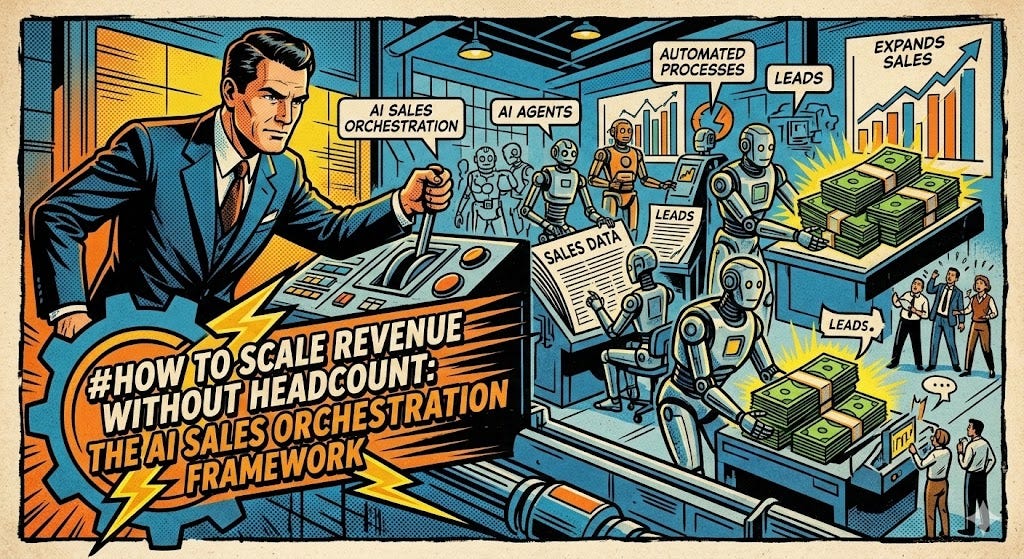
Three things are true simultaneously right now:
Pipeline math is harder. Buyers are more skeptical, cycles are longer, and conversion rates are under pressure across the board.
CAC is climbing. More touches, more content, more tools. And the cost to acquire each customer keeps going up.
Headcount growth is constrained. Even companies with strong balance sheets are cautious about adding quota-carrying reps.
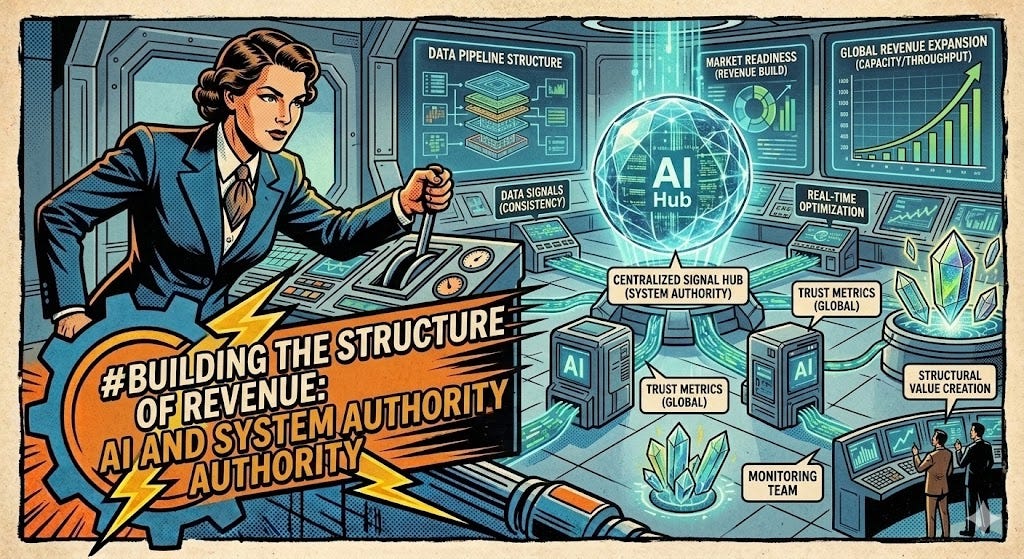
In Week 1 of this series, I wrote about System Authority. How GTM teams earn trust through signal and consistency. Week 2 is about what comes next: capacity and throughput.
Sales capacity is the new growth lever. And AI is the only way to expand it without expanding headcount.
What the STAK Panel Got Right
The STAK Ventures event brought together founders, operators, and investors who are building and deploying AI in real businesses. A few insights landed hard.
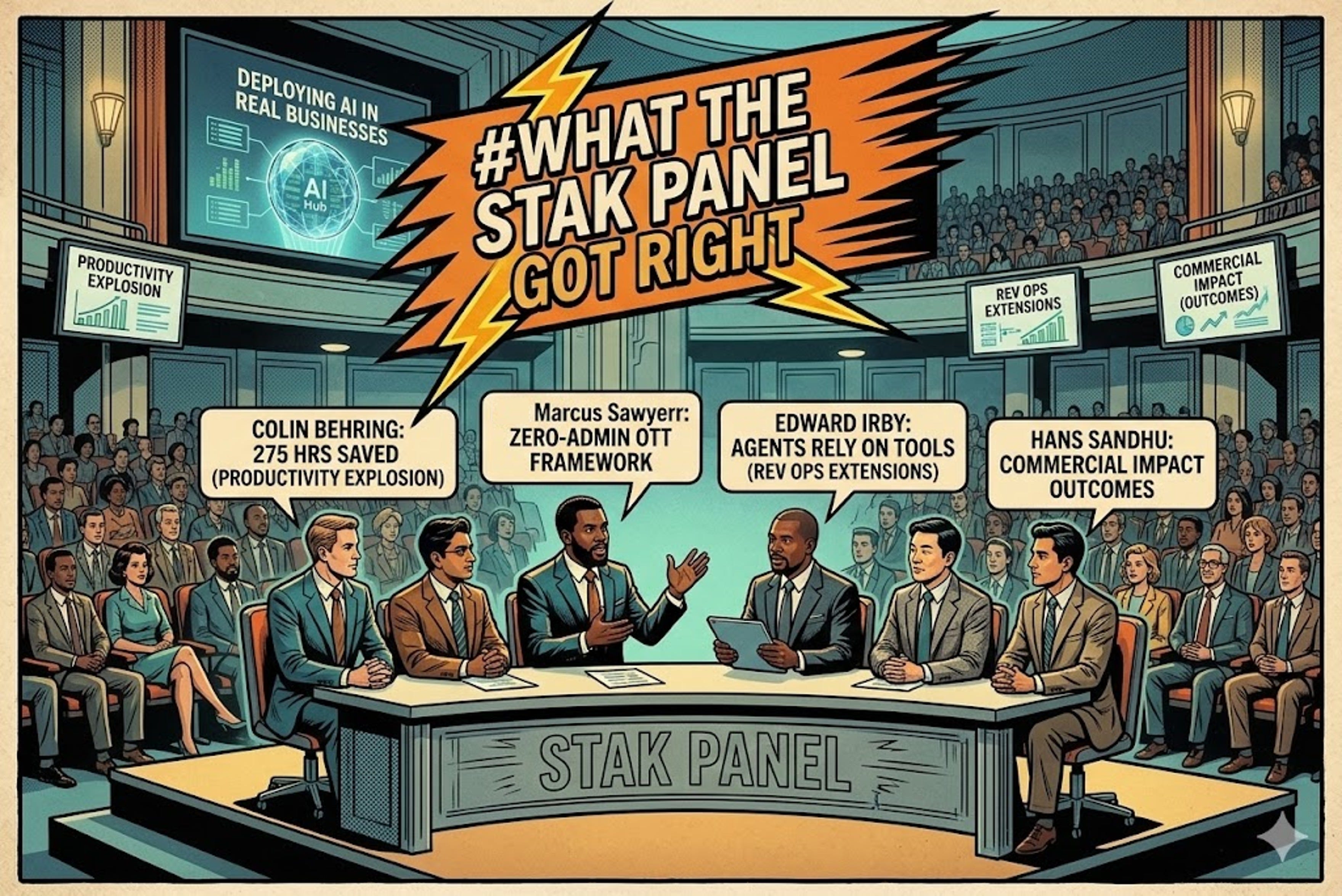
Colin Behring: The Productivity Explosion
Colin shared a real number. In just a few days, AI agents completed roughly 275 hours of work inside his organization. Not hypothetical. Not projected. Done.
That’s the equivalent of multiple full-time employees. In days.
For GTM, translate that into pipeline research, CRM hygiene, proposal generation, and reporting. These are the tasks eating your sellers alive. Agents reclaim that time and redirect it toward revenue.
Marcus Sawyerr: The Zero-Admin Company
Marcus has a simple mission: remove all the admin.
His OTT framework: Objective, Tasks, Tools is as clean as it gets. Start with the outcome you want. Then orchestrate agents to handle the repetitive work underneath it.
Salespeople should be focused on relationships, discovery, and negotiation. Everything else is a candidate for automation. Marcus is proving that’s not a fantasy. It’s operational now.
Edward Irby: Agents Are Only As Good As Their Tools
Edward made a point that every GTM leader needs to hear. Agents don’t operate in a vacuum. At You.com, the team invests heavily in search APIs, research APIs, content crawling, and evaluation frameworks, because the output quality of an agent depends entirely on what it’s connected to.
For revenue teams, that means your agents must be wired into your actual revenue stack: Salesforce, HubSpot, Gong, LinkedIn, enrichment tools. Agents become RevOps extensions. Disconnected agents become expensive experiments.
Hans Sandhu: Outcomes, Not Science Projects
Hans brought the business lens the room needed. Too many AI deployments inside companies are still science experiments. Interesting demos. No commercial impact.
For revenue teams, the outcome is simple: more pipeline, lower CAC, higher seller productivity. Every agent deployment should map back to one of those three. If it doesn’t, it’s a distraction.
The AI Sales Orchestration Framework
Most companies are deploying AI randomly. Winning companies are deploying AI orchestration.
This is the core thesis behind 21 Keys to AI Orchestration. It applies directly to GTM.
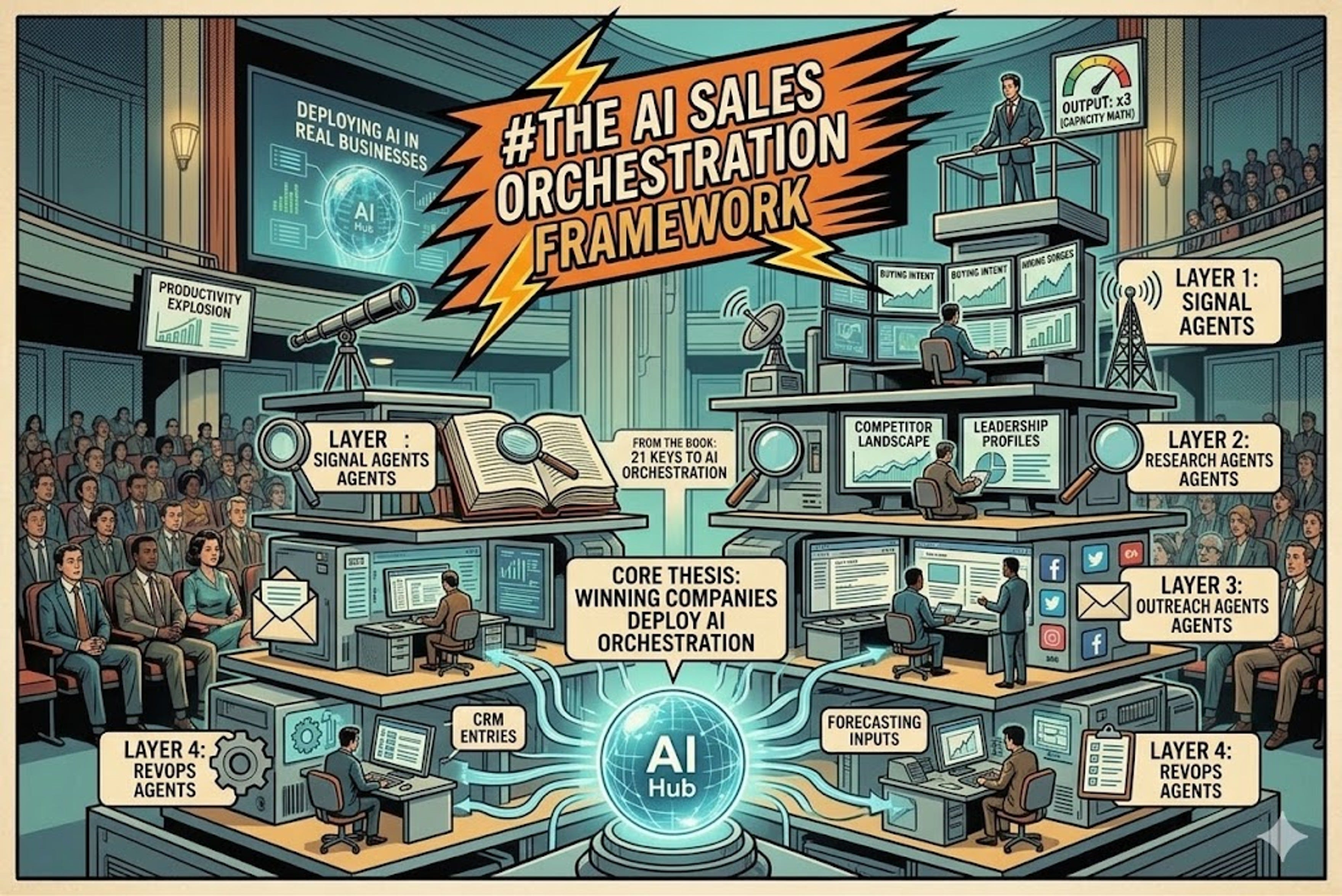
Here’s the four-layer framework I use with clients:
Layer 1: Signal Agents continuously monitor for buying intent. Hiring surges, funding rounds, product launches, regulatory shifts. The kind of real-time signal that used to require a full-time analyst. Now it’s automated and always on.
Layer 2: Research Agents build the account brief. Company analysis, competitor landscape, leadership profiles, financial signals. What used to take an SDR two to three hours per account now happens before the rep opens their laptop.
Layer 3: Outreach Agents draft personalized outreach. Like emails, LinkedIn messages, account hypotheses, all based on the signal and research layers. The seller edits and sends. Human judgment on top of machine throughput.
Layer 4: RevOps Agents update systems automatically. CRM entries, opportunity summaries, forecasting inputs. The administrative drag that kills seller momentum disappears.
A rep running this stack doesn’t perform like one rep. They perform like three. That’s not an exaggeration, but it’s basic capacity math.
Why This Changes the Equation for Founders and CROs
Historically, scaling revenue meant one thing: hire more people. More SDRs. More AEs. More RevOps headcount.

That model is breaking down. The question isn’t how many people do we need, but it’s how much revenue can each person produce?
AI orchestration changes the denominator. A team of five sellers, properly equipped, can perform like a team of fifteen. Hans Sandhu put it simply: the future isn’t SaaS alone. It’s outcome-driven AI systems.
For GTM leaders, that outcome is direct: more revenue per employee.
The Builders Advantage
At STAK Ventures, the room was full of builders. Founders, operators, investors who aren’t waiting to see how this plays out.
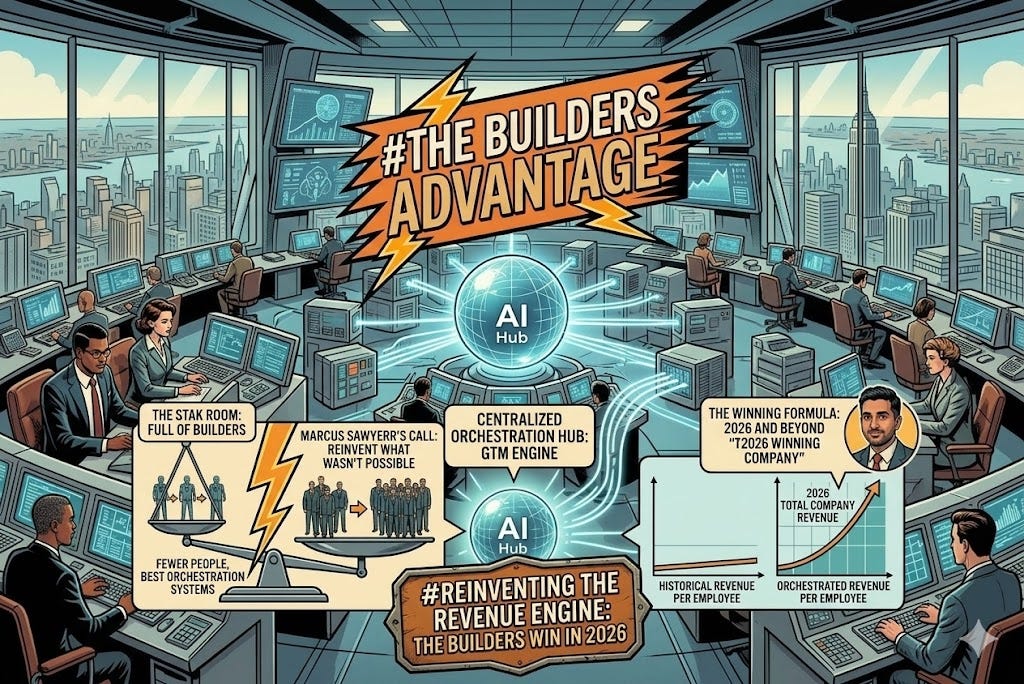
Marcus Sawyerr captured the moment well: reinvent what we thought wasn’t possible.
That’s exactly where GTM leaders stand right now.
The companies that win in 2026 won’t have the most salespeople. They’ll have the best sales orchestration systems.
Subscribe to GTMSoS for the full series. Pick up 21 Keys to AI Orchestration if you want the framework in depth. Week 3 is coming.