


Part 3 of 3: The AI Orchestration Series
The Great GTM Transition
The data is stark: 92% of marketing teams report AI productivity gains, yet only 5% of companies see measurable ROI from their AI investments. This disconnect isn't a technology problem—it's an orchestration problem.

I argue in 21 Keys of an AI Orchestrator, that leaders who master AI aren't those who deploy the most tools, but those who orchestrate human and machine intelligence into systematic, scalable revenue engines.
For founders scaling from founder-led sales to delegated growth, this transition from people-based to system-based GTM represents the difference between linear scaling and exponential growth.
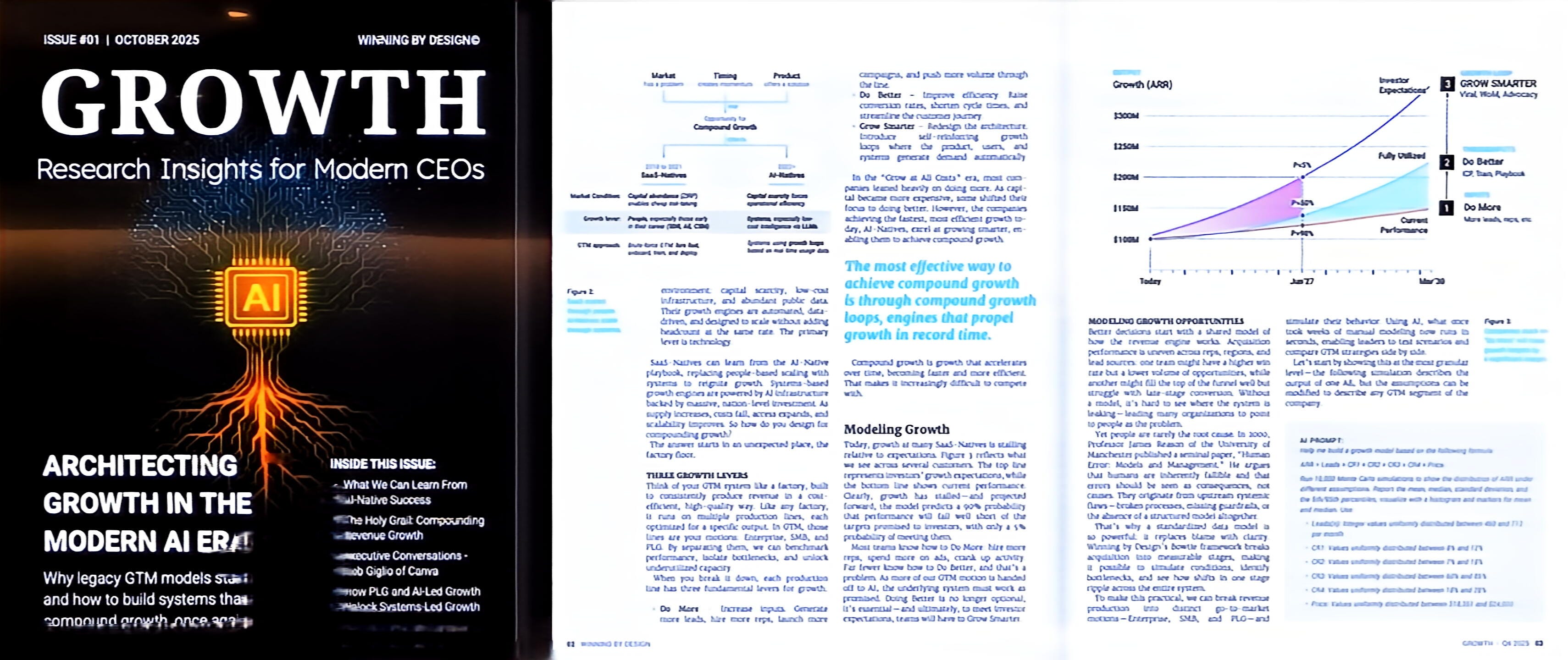
Web by Design announces their inaugural issue of Growth due to be released in physical form this fall.
The People-Based GTM Trap
Most founders scale revenue the only way they know how: adding people. More SDRs, more AEs, more marketing coordinators. This approach compounds both growth and costs, creating what Jacco van der Kooij calls the "SaaS native scaling trap"—where every dollar of growth requires proportional increases in headcount and overhead.
Current State:
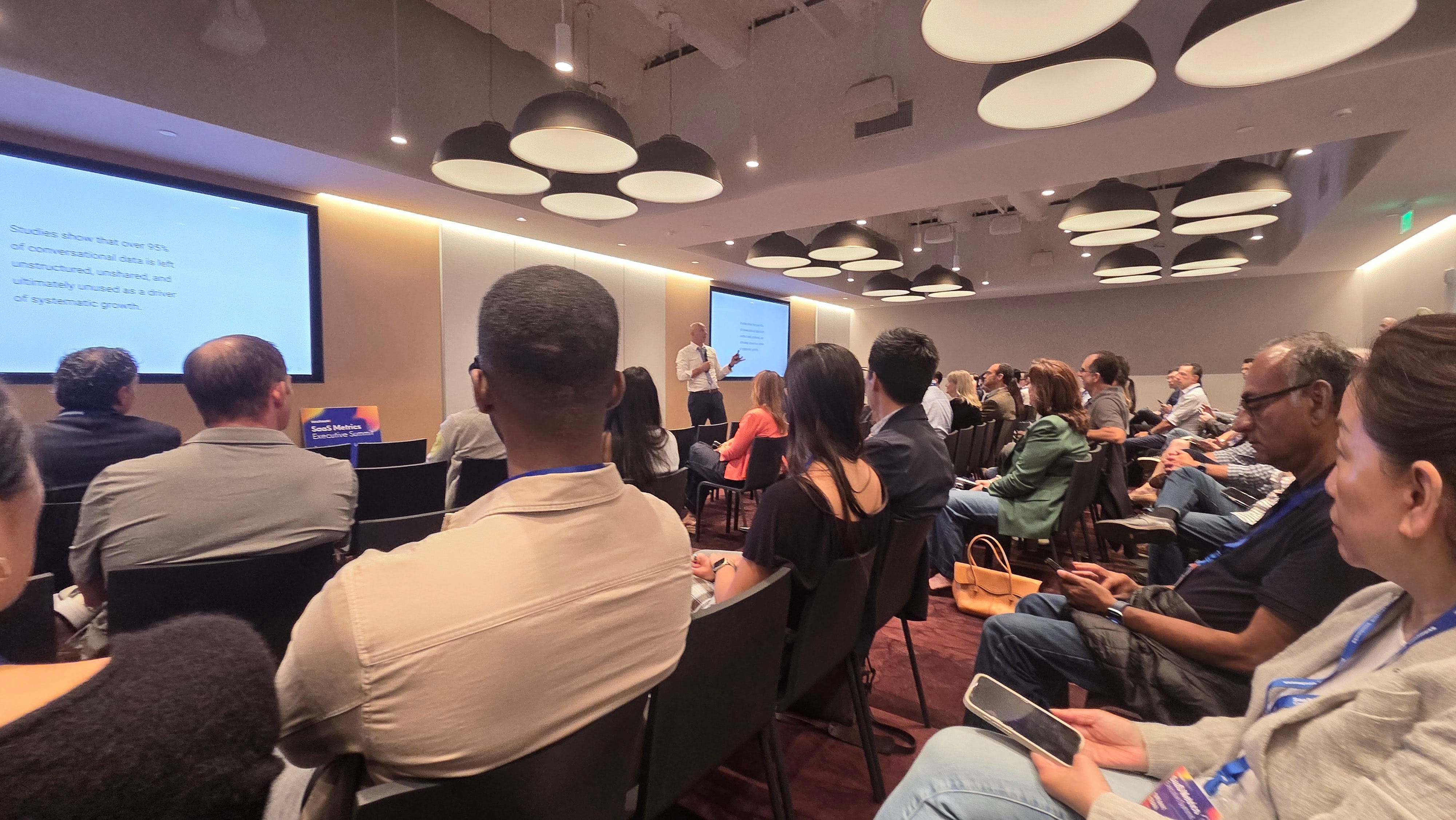
Jacco van der Kooij of Winning by Design delivers keynote at Benchmarkit AI SaaS Metrics Executive Summit in San Francisco
The result? Founders find themselves trapped in what AJ Gandhi identifies as revenue team fragmentation—marketing generates leads, sales works them individually, and customer success operates in isolation. Growth becomes a function of hiring speed rather than systematic improvement.
The System-Based Alternative: AI Orchestration Framework
My orchestration approach transforms this dynamic by replacing human variability with systematic intelligence. The framework operates on three core principles:
1. Signal Detection Over Activity Generation
Instead of more calls and emails, system-based GTM focuses on identifying and acting on predictive signals: intent data, engagement patterns, product usage indicators, and competitive intelligence.
2. Orchestrated Decision-Making
Rather than individual rep intuition, decisions flow through coordinated intelligence that combines human expertise with machine analysis—what I call "human-AI symbiosis."
3. Compound Learning Systems
Every interaction feeds back into system intelligence, improving targeting, messaging, and timing across all future engagements.
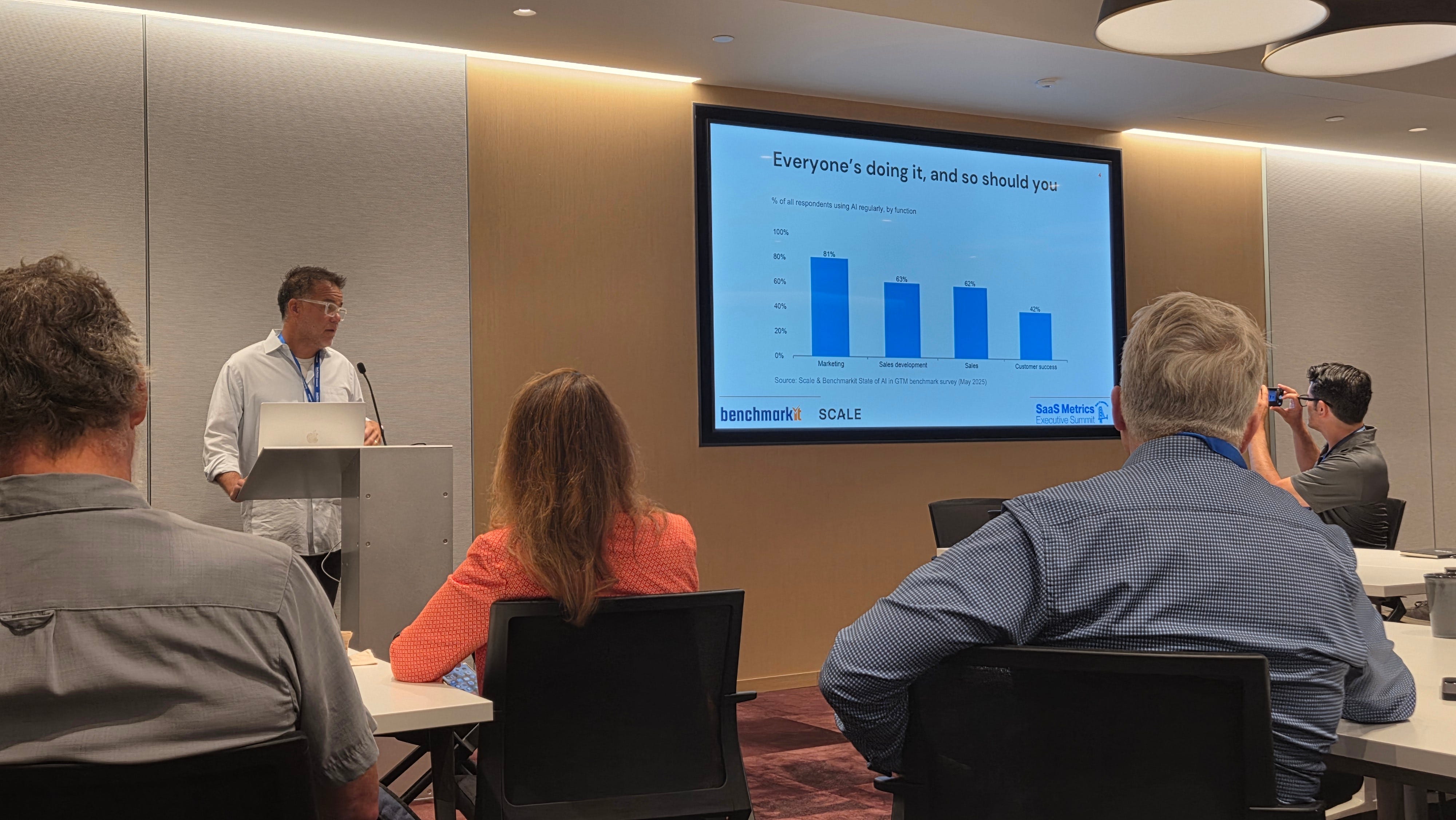
Craig Rosenberg moderates the discussion “Leveraging AI in GTM - The ROI”
Five Critical Insights for Founder-Scale Transition
Insight #1: AI Orchestration Requires a Dedicated Leader
Brandon Redlinger's research reveals that companies with a designated "Go-to-Market Engineer" or AI leader are 30% more likely to see significant AI impact. This isn't about technology management—it's about orchestrating the transition from people-dependent to system-dependent growth.
The Orchestrator Role:
Strategizes AI integration across GTM functions
Designs human-machine workflows
Measures system performance vs. individual performance
Builds organizational AI literacy
Insight #2: Value Realization Must Be Systematized
AJ Gandhi's GTM fundamentals framework identifies value realization as a critical area where most companies rely on human judgment rather than systematic measurement. System-based GTM transforms this through:
Automated ROI tracking and communication
Predictive customer success indicators
Systematic expansion trigger identification
AI-powered customer journey orchestration
Insight #3: The Revenue Engine Becomes Multi-Dimensional
Traditional people-based GTM optimizes single functions in isolation. System-based GTM orchestrates across dimensions:
Insight #4: Advanced Use Cases Drive Real ROI
While 92% see productivity gains from basic AI (content generation, email automation), real ROI comes from advanced orchestration:
AI Targeting & Lead Scoring: 3% more likely to report increased pipeline
Campaign Analysis & Optimization: 5% more likely to report increased conversion rates
Predictive Customer Success: Automated expansion identification and churn prevention
Real-Time Sales Coaching: AI-powered deal guidance and objection handling
Insight #5: System-Based GTM Requires New Metrics
Traditional metrics (MQLs, activity volume, individual quotas) don't capture system performance. Orchestration demands different measurement:
System Performance Indicators:
Revenue per GTM system dollar (not just per employee)
Signal-to-conversion efficiency rates
Cross-functional orchestration effectiveness
AI-human collaboration quality scores
Systematic learning speed (improvement rate over time)
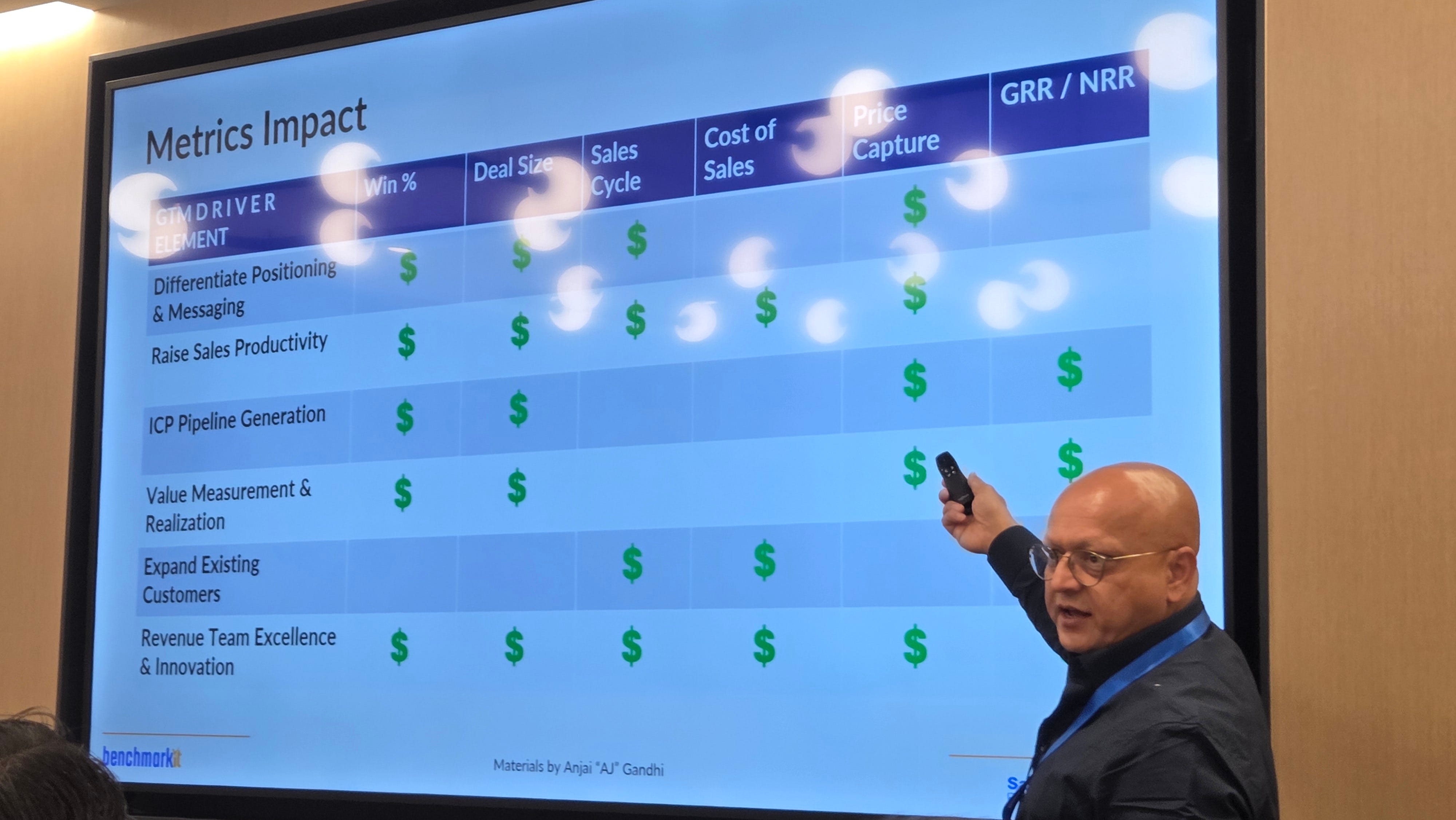
AJ Gandhi leads roundtable topic of comprehensive framework for evaluating GTM efficiency and initiatives for improving performance.
Three Priority Action Items for Founders
Priority Action #1: Establish AI Orchestration Leadership
Timeline: 30 days
Investment: $120K-180K annual salary or 20% fractional engagement
Why Priority: Without dedicated orchestration leadership, AI implementations remain siloed productivity tools rather than systematic revenue engines. The 30% effectiveness boost for companies with dedicated AI leaders isn't accidental—orchestration requires intentional design.
Founder Impact:
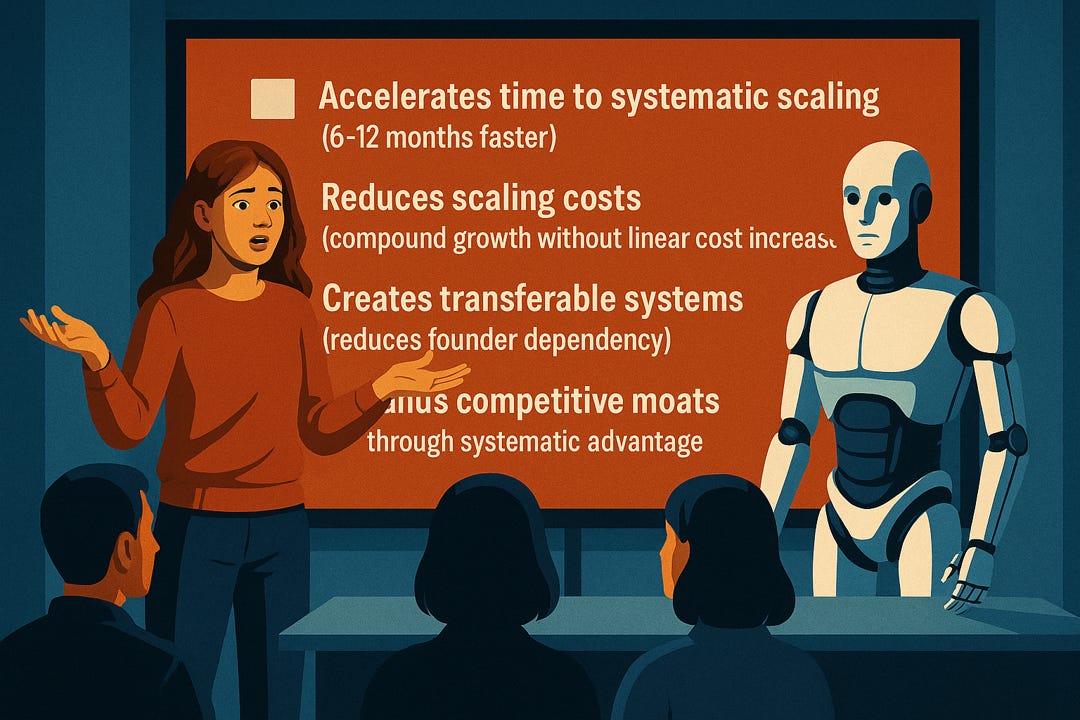
Accelerates time to systematic scaling (6-12 months faster)
Reduces scaling costs (compound growth without linear cost increases)
Creates transferable systems (reduces founder dependency)
Builds competitive moats through systematic advantage
Implementation Framework:
Define orchestration responsibilities (not just AI tool management)
Establish cross-functional authority (marketing, sales, customer success)
Create systematic learning processes
Build organizational AI literacy programs
Priority Action #2: Implement Real-Time Signal Intelligence
Timeline: 90 days for MVP, 6 months for full orchestration
Investment: $50K-100K in tooling + integration costs
Why Priority: The gap between 92% productivity gains and 5% ROI exists because most companies optimize activities rather than outcomes. Real-time signal intelligence transforms random acts of marketing and sales into systematic revenue generation.

Founder Impact:
Improves CAC efficiency by 25-40% through better targeting
Increases sales velocity through predictive deal scoring
Reduces customer acquisition costs while improving quality
Creates systematic expansion opportunities
System Components:
Intent data integration and scoring
Product usage analytics for expansion signals
Competitive intelligence automation
Customer health scoring for retention/expansion
Real-time deal risk assessment
Priority Action #3: Design Human-AI Orchestration Workflows
Timeline: 4-6 months for full implementation
Investment: Process redesign + team training (typically $75K-150K)
Why Priority: Most AI implementations fail because they automate existing inefficient processes rather than orchestrating new capabilities. Systematic workflows ensure AI enhances rather than replaces human expertise.

Founder Impact:
Scales founder expertise through systematic processes
Reduces key-person dependencies
Improves consistency across all GTM functions
Creates compound learning that improves over time
Orchestration Design:
The Compound Effect: From Linear to Exponential
The transition from people-based to system-based GTM creates compound advantages:
Year 1: System foundation reduces scaling costs and improves consistency
Year 2: AI orchestration begins driving systematic improvements across all functions
Year 3+: Compound learning effects create sustainable competitive advantages
Future State:
The Orchestration Imperative
My central thesis proves prescient: AI orchestration isn't about replacing human intelligence—it's about systematically amplifying it. For founders scaling beyond founder-led sales, this represents the difference between building another consultancy (people-dependent) versus building a systematic revenue engine (people-enhanced, system-driven).
The companies that master this transition won't just scale faster—they'll create sustainable competitive advantages that compound over time. The question isn't whether to make this transition, but how quickly one can orchestrate it systematically.
The 5% who achieve real ROI from AI aren't the ones with better technology. They're the ones with better orchestration.
Doug Skinner is the author of "21 Keys of an AI Orchestrator" and founder of Intentional Management LLC, helping B2B SaaS founders transition from people-based to system-based growth. Connect with him on LinkedIn or learn more about systematic revenue orchestration at https://gtmsos.com.